
JavaScript Learning Platforms & Courses
Master JavaScript faster with expert-curated courses, interactive tutorials, and hands-on projects designed for beginners and intermediate coders. Whether you’re comparing top online platforms, hunting for free coding resources, or weighing the value of bootcamps and certifications, this hub simplifies your learning journey. Skip the guesswork—find the perfect learning path, avoid costly mistakes, and build real-world skills through step-by-step exercises and portfolio-ready projects. Start coding with confidence today.
 JavaScript Certification Guide - Is It Worth It?
 Top JavaScript Bootcamps - Reviews and Comparisons
 Free JavaScript Learning Resources - Websites, Tutorials, and Communities
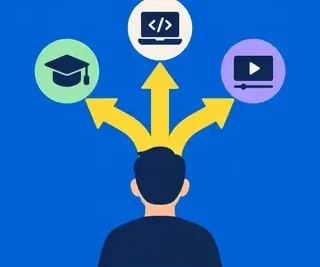 Choosing the Right JavaScript Learning Path for Your Goals
 Best Online JavaScript Courses for Beginners to Advanced - [Platform Name] vs [Platform Name]
JavaScript Learning Platforms & Courses
Welcome to LearnJavaScriptQuickly’s central hub for navigating the vast world of JavaScript education. Whether you’re a complete beginner or an intermediate coder aiming to level up, this category helps you compare platforms, choose the right learning path, and even decide if certifications are worth your time. We’ve curated actionable comparisons, free resources, bootcamp reviews, and career-focused guides to save you hours of research—so you can start writing code faster, not just reading about it.
Best Online JavaScript Courses for Beginners to Advanced - [Platform Name] vs [Platform Name]
Here we pit leading e-learning giants—like Udemy vs Coursera, freeCodeCamp vs Codecademy, or Frontend Masters vs Pluralsight—head-to-head. You’ll find side-by-side breakdowns of curriculum depth, teaching style, project intensity, pricing, and community support. Expect honest verdicts on which platform suits absolute beginners versus experienced devs seeking advanced topics like async patterns or framework integrations. We also highlight hidden gems like interactive playgrounds and lifetime access deals, so you can invest money and time wisely.
Choosing the Right JavaScript Learning Path for Your Goals
Not all JavaScript roads lead to the same destination—building interactive websites, landing a front-end job, or becoming a full-stack developer requires different routes. In this section, we map out goal-oriented roadmaps: from “I want a job in 6 months” to “I just need to automate my spreadsheet tasks.” We explain when to start with vanilla JS versus jumping straight into React or Node.js, and how to weave in algorithms, DOM manipulation, and debugging practice. You’ll also get tips on sequencing free tutorials, paid courses, and personal projects for maximum retention.
Free JavaScript Learning Resources - Websites, Tutorials, and Communities
You absolutely can master JavaScript without spending a dime—if you know where to look. This subcategory curates the best no-cost resources: interactive platforms like freeCodeCamp and JavaScript.info, YouTube channels with project-based tutorials, and Reddit/Discord communities for peer support. We also list open-source practice repositories, coding challenge sites (Codewars, LeetCode), and browser-based sandboxes like CodePen. Each resource is vetted for accuracy, recency, and beginner-friendliness, so you avoid outdated tutorials that teach ES5 as if it’s current.
Top JavaScript Bootcamps - Reviews and Comparisons
Thinking about a structured, intensive bootcamp? We’ve got you covered with unbiased reviews of top programs like General Assembly, Flatiron School, and Coding Dojo. Our comparisons focus on curriculum relevance, instructor quality, career services, job placement stats, and tuition costs—including income-share agreements. We also flag red flags like unrealistic promises or outdated tech stacks. Whether you prefer full-time, part-time, or remote, this section helps you decide if a bootcamp’s speed and price align with your learning style and budget.
JavaScript Certification Guide - Is It Worth It?
Certifications can be polarizing—some employers love them, others ignore them. Here, we dissect popular credentials like Microsoft’s JS Certification, freeCodeCamp’s certificates, and industry-recognized options from W3Schools or LinkedIn Learning. We analyze the cost, exam difficulty, renewal requirements, and real-world recognition. More importantly, we give honest advice on when a cert helps (e.g., for job screening filters or career changes) and when building a portfolio of GitHub projects matters more. You’ll also learn how to phrase certifications on your résumé to maximize impact.
Frequently Asked Questions
Which JavaScript platform is best for a total beginner?
For absolute beginners, freeCodeCamp is often the best because it’s free, project-based, and you earn certificates. If you prefer interactive video lessons, Codecademy offers hands-on exercises but requires a subscription for full access. For a structured, paid path, Udemy’s top-rated courses (like Jonas Schmedtmann’s) are affordable and go from zero to advanced. Try two or three free trials to see which teaching style clicks before committing money.
How long does it take to learn JavaScript enough to get a job?
With 10–15 hours per week of focused study, most beginners can reach job-ready level in 6 to 12 months. That includes building 3–5 portfolio projects, mastering DOM manipulation, async code, and basics of a framework like React. Bootcamps compress this to 3–4 months but require full-time commitment. The key is consistent practice—spend at least half your time coding, not just watching tutorials.
Are free JavaScript courses as good as paid ones?
Yes, for fundamentals, free resources like freeCodeCamp, JavaScript.info, and MDN Web Docs are excellent and often more up-to-date than paid courses. Paid courses add polish, curated learning paths, and instructor support, which helps with motivation and advanced topics. For career-focused learning, a mix works best—use free resources for foundations, then invest in a paid course or bootcamp for structured projects and job prep.
Do JavaScript bootcamps actually guarantee job placement?
No reputable bootcamp guarantees job placement—despite what marketing says. Some offer “money-back” or “job-ready” pledges, but they often have strict outcome-based conditions. Look at third-party reviews on SwitchUp or Course Report for real graduation rates and salaries. Bootcamps help most when you already have basic coding knowledge and need portfolio-building, interview prep, and networking. Your own effort and project quality matter far more than the bootcamp name.
Is a JavaScript certification necessary for my résumé?
Not strictly necessary, but it can help in specific cases—for breaking into tech without a degree, passing automated HR filters, or showing commitment to self-learners. Employers overwhelmingly prefer a GitHub portfolio with real projects over certificates. If you choose to get one, pick from recognized providers like freeCodeCamp (free) or Microsoft (paid). Never pay for “certification only” courses from unknown websites—they’re often worthless in hiring decisions.