Build Your First Game with JavaScript: A StepbyStep Beginner Guide
😊 Dive into game development! This JavaScript game beginner tutorial guides you step-by-step through building your first game, perfect for beginners eager…
Read article
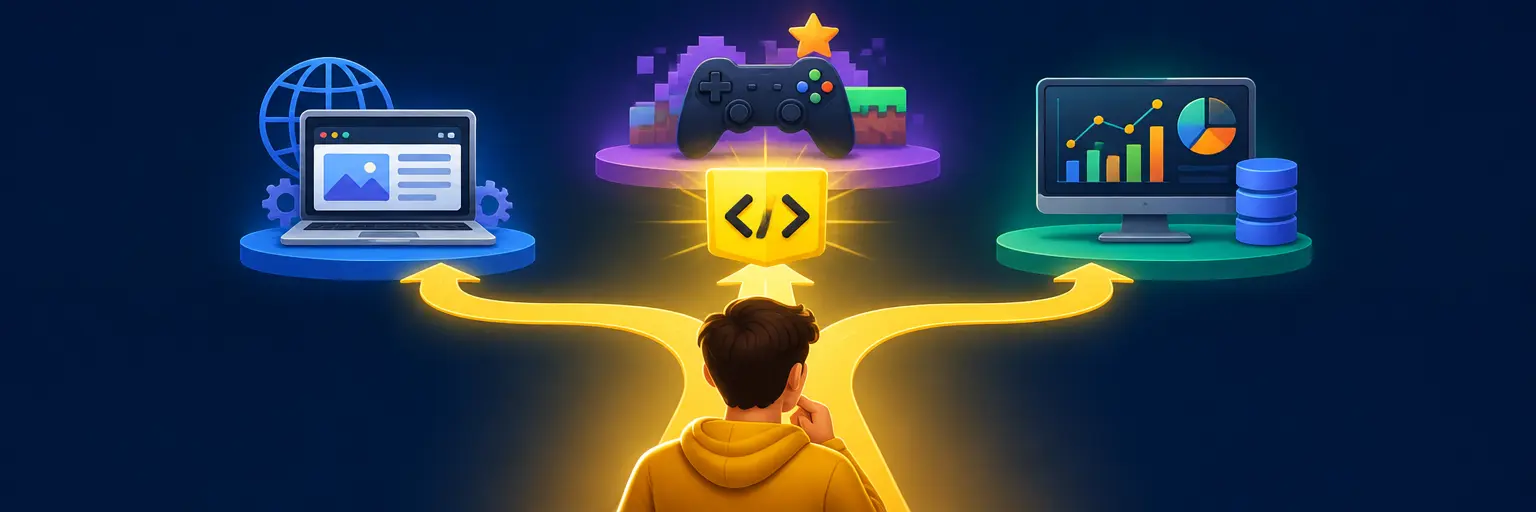
Master JavaScript from scratch with structured, project-driven learning paths tailored to your goals! Whether you dream of building interactive websites, creating addictive games, or crafting stunning data visualizations, our beginner-friendly routes turn complex concepts into hands-on, bite-sized lessons. Each path includes real-world projects, coding challenges, and instant feedback to solidify your skills fast. No more random tutorials—just a clear roadmap from zero to confident coder. Start your journey today and watch your ideas come to life! 🚀✨
Welcome to LearnJavaScriptQuickly! This subcategory is your structured guide to mastering JavaScript through three distinct, career-focused paths: Web Development, Game Development, and Data Visualization. Instead of wandering through random tutorials, you’ll follow step-by-step roadmaps tailored to your goals. Each path is built for beginners, with clear milestones, hands-on projects, and practical exercises. Whether you dream of building interactive websites, browser-based games, or dynamic charts, these learning paths will transform you from novice to confident coder. Let’s dive into each route and discover what you’ll achieve.
This path focuses on using JavaScript to manipulate the Document Object Model (DOM), handle events, and create responsive user interfaces. You’ll start with basic syntax, then move to functions, arrays, and objects, finally building real-world projects like to-do lists, modal popups, and interactive forms. Emphasis is on modern ES6+ features and fetch API for working with external data.
Expect to learn how to add smooth animations, validate user input, and dynamically update page content without reloading. You’ll also explore local storage to save user preferences and build single-page application (SPA) logic from scratch. By the end, you’ll have a portfolio-ready interactive website that showcases your JavaScript prowess.
Here, you’ll use JavaScript’s canvas API and requestAnimationFrame to create 2D games like Snake, Pong, and a simple platformer. The path teaches game loops, collision detection, sprite animation, and keyboard/mouse input handling. You’ll start with basic drawing shapes, then progress to adding scoring, levels, and sound effects using the Web Audio API.
You’ll also learn to structure code with game state management and object-oriented programming (classes) to keep your game scalable. Expect to build a complete, playable game by the end, with tips on debugging and optimizing performance for smooth 60fps gameplay. This path is perfect for those who want immediate, visual results while sharpening logical thinking.
This learning path introduces you to Chart.js and D3.js, the two most popular JavaScript libraries for creating interactive charts and graphs. You’ll start by rendering simple bar and line charts, then advance to scatter plots, pie charts, and even geospatial maps. Focus is on binding data to DOM elements, scaling, and tooltip interactions.
You’ll learn how to load CSV/JSON files, filter datasets, and create responsive visualizations that update in real time. Expect to build a mini analytics dashboard that presents sample business or weather data elegantly. This path also covers accessibility, color theory, and storytelling techniques to make your charts compelling and readable.
After exploring each path, you’ll combine skills in a capstone project. For instance, build a data-driven game that displays player stats on a chart, or a website with an embedded interactive map. This section teaches you how to integrate multiple JavaScript concepts into one cohesive product, debug cross-functionality, and optimize code structure.
You’ll also get guidance on version control with Git, code formatting, and writing clean, documented code. This prepares you for real-world collaboration and job interviews. Expect to walk away with a standout portfolio piece that proves your versatility across all three domains.
We include weekly challenges, downloadable cheat sheets, and curated video tutorials for each path. You’ll learn best practices for breaking down problems, using browser developer tools, and testing your code with simple assertions. Additionally, you’ll find links to community forums and Discord servers where you can ask questions.
To retain knowledge, we recommend the “code-along” method: pause videos, type every line yourself, and experiment with variations. Each path concludes with a self-assessment quiz and a mini-project rubric. By following this structured approach, you’ll avoid tutorial purgatory and steadily gain confidence.
No, all paths assume you are a complete beginner. You’ll learn JavaScript syntax from zero, and each path starts with basic concepts like variables, loops, and functions before diving into advanced topics.
Absolutely. The first two modules (core JavaScript basics) are shared across all paths. After that, you can sample each path’s introductory lessons and switch if your interest changes. Your progress within the core modules will carry over.
On average, dedicated learners finish a single path in 4-6 weeks with 2 hours of daily practice. The capstone project may add 1-2 weeks. However, you can go at your own pace; our structure supports both accelerated and slow learners.
Yes, each path offers a downloadable certificate of completion after you pass the final project submission. Additionally, capstone completions earn a special “Full Stack JavaScript Explorer” badge.
All you need is a modern web browser (Chrome or Firefox) and a code editor like Visual Studio Code (free). We provide in-browser coding environments for early lessons, but for later projects, we’ll guide you through setting up a local server.