ES5: The Foundation of Modern JavaScript A Deep Dive
🤔 Master essential ES5 JavaScript fundamentals with this in-depth tutorial. Unlock core concepts and build a solid foundation for advanced JavaScript development…
Read article

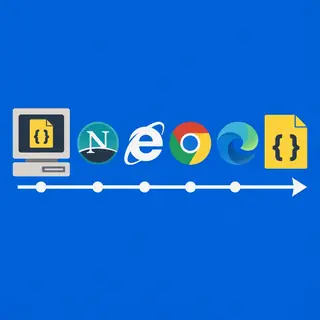
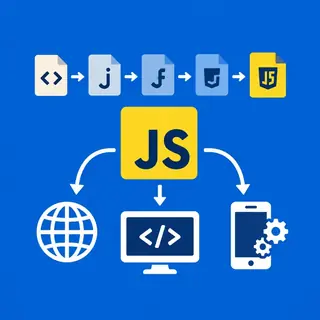
JavaScript has come a long way since its humble beginnings, and understanding the evolution of ECMAScript standards is key to writing modern, efficient code. From the foundational ES5 that brought stability to the web, to the game-changing ES6 (also known as ES2015) that introduced arrow functions, classes, and template literals, each update has reshaped how developers think. Today’s modern JavaScript continues to evolve with features like optional chaining, promises, and async/await, making code cleaner and more powerful than ever. Whether you’re just starting out or brushing up on the latest syntax, this guide will help you grasp the milestones that turned JavaScript into one of the most versatile languages in the world. Get ready to code smarter, not harder, as we dive into the past, present, and future of ECMAScript! 🚀
Welcome to our deep dive into the ECMAScript standards that have shaped JavaScript into the powerful, versatile language it is today. From the foundational ES5 to the revolutionary ES6 and the continuous updates of modern JavaScript, this subcategory is designed for learners at LearnJavaScriptQuickly who want to understand *why* the language looks and behaves the way it does. Here, you’ll trace the timeline of key features, grasp the impact of each major release, and prepare yourself to write cleaner, more efficient code. Whether you’re a beginner or an intermediate coder, mastering these standards is your gateway to reading and using contemporary libraries, frameworks, and tools with confidence.
ECMAScript 5 (ES5), finalized in 2009, is the baseline that almost all older browsers support natively. For beginners, understanding ES5 is like learning the traditional rules of the road before driving a modern car. This standard introduced strict mode ('use strict'), which helps you catch common coding mistakes, and added powerful array methods like forEach, map, filter, and reduce that make data manipulation much more readable. You’ll also encounter JSON parsing and serialization built directly into the language, plus property descriptors for more control over object behavior.
What you can expect from this subcategory is a clear breakdown of these core features, with practical examples you can run immediately. We’ll show you how to use Object.create() for prototypal inheritance and why the new method syntax for arrays saves you from writing repetitive loops. By the end, you’ll be able to read older codebases without confusion and appreciate the stepping stones that led to modern syntax. This knowledge is crucial because many legacy systems and interview questions still rely heavily on ES5 concepts, so mastering it gives you a solid, transferable foundation.
ES6, also known as ES2015, is arguably the most significant update in the language’s history. It introduced let and const for block-scoped variables, ending the era of confusing var hoisting issues. You’ll also learn about arrow functions, which offer concise syntax and lexical this binding, making callbacks and event handlers much more elegant. This release brought classes, template literals, destructuring, default parameters, and the spread/rest operators—all features that reduce boilerplate and improve readability. For any modern project, from React to Node.js, ES6 is the minimum baseline you’ll encounter.
In this section, we’ll take you through each feature with real-world use cases. For instance, you’ll see how destructuring simplifies API responses and how template literals make string interpolation a breeze. We’ll also cover modules (import/export), which finally brought a standardized way to structure code across files. By the end, you’ll be able to refactor old ES5 code into modern, concise ES6 style and understand why the ecosystem adopted this as the new standard. Expect hands-on exercises that compare old vs. new syntax side-by-side, reinforcing your memory through practice.
After the big ES6 release, ECMAScript adopted an annual release cycle. ES2016 added Array.prototype.includes and the exponentiation operator (**). ES2017 brought async/await, which completely transformed asynchronous programming, along with Object.values() and Object.entries(). ES2018 introduced rest/spread for objects, promise.finally, and async generators. ES2019 added flat() and flatMap() for arrays, plus Object.fromEntries(). ES2020 gave us optional chaining (?.) and nullish coalescing (??), which are lifesavers for handling nested data and default values safely.
This subcategory will guide you through these years with focused examples. You’ll learn how async/await removes callback hell and makes your code read like synchronous logic, while optional chaining prevents common runtime errors when accessing deep properties. We’ll also cover BigInt for handling numbers beyond the safe integer limit, and dynamic import for lazy-loading modules. By understanding these incremental updates, you’ll stay current with modern best practices without feeling overwhelmed by endless syntax changes. Each feature is explained with before-and-after code snippets, ensuring you see the practical benefits immediately.
The most recent standards, ES2021 and later, focus on productivity and developer experience. ES2021 introduced logical assignment operators (||=, &&=, ??=), Promise.any, and String.replaceAll. ES2022 brought Top-level await, class fields and private methods (using #), and Array.prototype.at() for cleaner index access from the end. ES2023 added toSorted(), toReversed(), and other immutable array methods that don’t mutate the original data—a huge win for functional programming styles. These features make JavaScript more reliable, expressive, and less prone to accidental side effects.
Here, we’ll explore these modern additions with practical scenarios. For example, you’ll learn how private class fields enforce encapsulation, making your objects safer and more maintainable. Top-level await lets you run asynchronous operations directly in modules without wrapping them in an async function, simplifying initialization code. The immutable array methods are perfect for state management in frameworks like React, where you want to avoid mutating props directly. We’ll also touch on upcoming proposals, so you’ll be aware of what’s on the horizon. By the end, you’ll feel equipped to write code that leverages the latest tools while ensuring backward compatibility when needed.
Understanding the evolution is one thing; applying it in real projects is another. This section provides actionable advice on how to transition from ES5 to modern JavaScript without breaking existing code. You’ll learn about Babel and TypeScript—two essential tools for compiling modern syntax into widely supported versions. We’ll discuss build tools like Webpack and Vite that handle module bundling and transpilation. You’ll also see how to set up a minimal project scaffold that uses ES modules natively in Node.js and browsers, thanks to modern support for import and export.
Expect to find step-by-step migration guides, such as converting var to const/let, replacing function expressions with arrow functions, and integrating async/await into your promise chains. We’ll also cover common pitfalls, like accidentally mutating objects with new array methods and misunderstanding this in arrow functions. You’ll get checklists to audit your codebase for old patterns and practical exercises to refactor sample snippets. This knowledge bridges the gap between knowing the syntax and using it professionally, ensuring you can contribute to modern projects from day one.
ES5 is the older standard (2009) that introduced strict mode, JSON support, and basic array methods. ES6 (2015) added major features like let/const, arrow functions, classes, modules, and template literals. ES6 makes code more concise and readable, but ES5 is still supported everywhere. Modern development typically uses ES6 or later, with tools like Babel for older browser compatibility.
Yes, it’s beneficial to learn ES5 basics first because many legacy codebases and interview questions reference it. Understanding var, function expressions, and prototype-based inheritance helps you appreciate ES6 improvements. However, you don’t need to master all ES5 quirks; focus on core concepts like loops, functions, and objects, then move to ES6 to write cleaner code.
Yes, async functions and the await keyword were introduced in ECMAScript 2017 (ES2017). They provide a more readable way to work with promises, allowing you to write asynchronous code that looks synchronous. This feature is widely supported in modern browsers and Node.js, making it a standard practice for handling network requests, file operations, and timers.
Optional chaining (?.) lets you safely access nested properties without checking if each level exists—if a reference is null or undefined, it short-circuits and returns undefined. Nullish coalescing (??) returns the right-hand value only when the left is null or undefined, unlike || which also defaults for falsy values like 0 or ''. Both were added in ES2020.
The best way is to follow the official TC39 proposal repository on GitHub and use resources like the MDN Web Docs, which updates examples regularly. Also, subscribe to JavaScript newsletters and blogs (e.g., JavaScript Weekly). Practice by writing small projects using the latest syntax, and use tools like Babel to transpile for older environments. Consistent exposure and hands-on use are key.