Mastering Common JavaScript Security Vulnerabilities: XSS, CSRF, and Injection
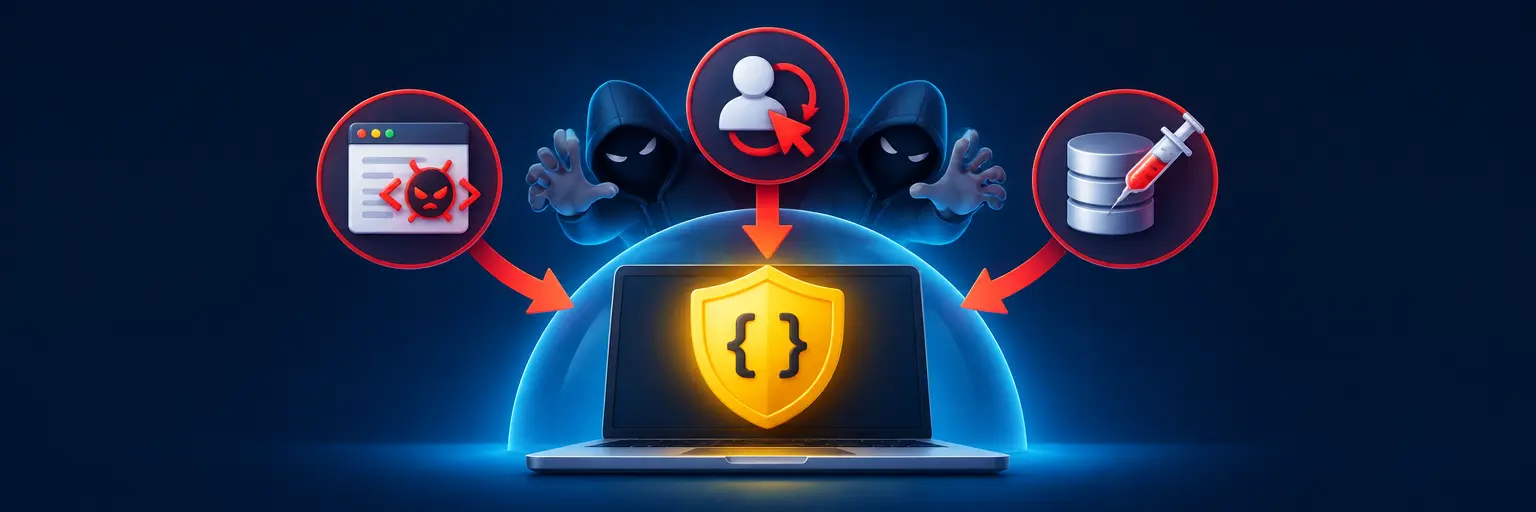
Welcome to the Common JavaScript Security Vulnerabilities subcategory at LearnJavaScriptQuickly. Here, you’ll dive deep into the three most notorious threats that plague web applications: Cross-Site Scripting (XSS), Cross-Site Request Forgery (CSRF), and Code Injection. This section is designed to turn you from a casual coder into a security-aware developer. We’ll break down complex attack vectors into digestible lessons, provide real-world code examples, and show you how to harden your JavaScript code against exploits. Perfect for beginners and intermediates, this content focuses on practical defense strategies, secure coding practices, and vulnerability detection. Let’s start by understanding how attackers think, then move to neutralizing their tactics with modern JavaScript security features.
🛡️ Understanding Cross-Site Scripting (XSS) Attacks
XSS is the villain of client-side security, where attackers inject malicious scripts into trusted websites. You’ll learn the three main types: stored XSS, reflected XSS, and DOM-based XSS. We’ll walk through how unsanitized user input—like comments, search bars, or URL parameters—becomes the launchpad for data theft, session hijacking, or keylogging. By the end, you’ll know exactly why escaping output with functions like textContent over innerHTML is non-negotiable.
Expect hands-on labs where you’ll simulate an XSS payload, then patch it using Content Security Policy (CSP) headers and input validation. We’ll also cover modern frameworks like React’s automatic escaping, but emphasize that raw dangerouslySetInnerHTML can still be a backdoor. You’ll leave with a checklist to audit your own codebase, ensuring no unescaped variable reaches the DOM. This is the foundation every JavaScript developer must master to prevent client-side chaos.
🔗 Demystifying CSRF: The Silent Session Thief
CSRF tricks authenticated users into executing unwanted actions, like changing email or transferring funds, without their consent. Here, you’ll explore how attackers craft malicious requests using forged forms or hidden image tags, leveraging your active session cookies. We’ll dissect the classic flow: a user logs into a banking site, then visits an evil page that fires a POST request. You’ll discover why relying solely on cookies is fragile and why SameSite cookies, CSRF tokens, and Origin headers are your armor.
Practical tutorials show you how to implement double-submit cookie patterns in vanilla JavaScript and integrate anti-CSRF middleware in Express.js. We’ll also compare synchronous vs. asynchronous token validation, and how to protect AJAX calls with custom headers. Each lesson includes a vulnerable demo, followed by a secure rebuild, so you can see the difference in real time. By the end, you’ll confidently defend any state-changing endpoint against this sneaky exploit.
💉 Injection Attacks: Beyond SQL, Into JavaScript
Injection isn’t just about SQL—JavaScript injection can happen via eval(), Function() constructors, or dangerously concatenated strings for API calls. We’ll explore how attacker-controlled data flows into your code, leading to remote code execution or prototype pollution. You’ll learn to identify sink points like innerHTML, document.write, and setTimeout with string arguments. We’ll also cover command injection in Node.js when spawning processes without sanitization.
Our step-by-step guide teaches you to replace risky functions with safer alternatives—using JSON.parse() instead of eval, or using parameterized queries for database calls. You’ll experiment with sanitizing libraries like DOMPurify and validating schemas with Joi. Through simulated attacks, you’ll witness how a simple payload can crash your server or steal secrets. Post-lesson, you’ll adopt a zero-trust mindset for any input that crosses your trust boundary, making your JavaScript robust against this classic exploit family.
🧪 Detecting Vulnerabilities with Security Scanners & Manual Testing
Knowing theoretical attacks isn’t enough; you need to find them in your own projects. This section introduces popular tools like OWASP ZAP, Burp Suite, and npm-based linters such as eslint-plugin-security. You’ll learn to configure automated scans for XSS, CSRF, and injection patterns, interpreting false positives and prioritizing real threats. We also cover browser developer tools for manual testing—like checking cookies attributes, inspecting network requests for exposed tokens, and using the console to test payloads safely.
Expect a mini-workflow: run a static analysis, then dynamic penetration tests on a sample app, then fix findings systematically. We’ll share cheat sheets for common payloads and how to test CSP headers via report-only mode. By combining automation with human intuition, you’ll switch from reactive patching to proactive security. This hands-on approach ensures you’re not just learning defense, but mastering vulnerability discovery like a pro.
🚀 Implementing Secure Coding Practices in Modern JavaScript
Finally, we’ll wrap up with a comprehensive security checklist tailored to modern JavaScript environments, including ES6+, Node.js, and browser APIs. You’ll learn to enforce secure defaults: using HttpOnly and Secure cookies, enabling Subresource Integrity (SRI) for CDNs, and adopting trusted types for DOM operations. We’ll also cover how to secure dependencies with npm audit and maintain a minimal attack surface by keeping libraries updated.
This section includes real-world code refactoring—transforming insecure patterns into hardened solutions. You’ll practice building a small app with integrated CSRF tokens, sanitized inputs, and strict CSP headers. We emphasize the principle of least privilege and how to structure your code for easier auditability. By the end, you’ll have a mental model to write JavaScript that’s as secure as it is functional, ready to apply to personal projects or workplace production code.
Frequently Asked Questions
What is the most common type of XSS attack I should worry about as a beginner?
Stored XSS is most critical because the malicious script is permanently saved on the server, affecting every visitor. For example, a blog comment containing a script tag will run for anyone viewing that page. Focus on sanitizing all user-generated content before storing it and escaping it on output to eliminate this risk.
Can CSRF attacks happen if I use only JSON APIs with JavaScript?
Yes, CSRF can still occur. An attacker can send a POST request with Content-Type: application/json using a simple HTML form? Actually, forms can’t set that header, but they can trigger requests via fetch from a malicious origin. Ensure you validate the Origin header and use custom CSRF tokens in headers for all state-changing requests.
Why is eval() considered a security hazard in JavaScript injection?
eval() executes arbitrary strings as code, meaning if any part of that string comes from user input, it becomes a direct vector for remote code execution. Even if you think the input is safe, a single slipped quote can break your logic. Always replace eval() with JSON.parse() for data, or refactor to avoid dynamic code generation entirely.
How often should I run security scans on my JavaScript project?
Integrate automated scans into your CI/CD pipeline to run on every build. Additionally, perform a deep manual review after major feature updates or before public releases. Weekly dependency audits with npm audit are also recommended to catch known vulnerabilities in packages you rely on.
Does using a popular framework like React make my app immune to XSS?
No, frameworks reduce risk but don’t eliminate it. React escapes strings by default, but using dangerouslySetInnerHTML, href with javascript: URLs, or passing unvalidated props into event handlers can reintroduce vulnerabilities. Always keep your framework updated and validate any data that bypasses its safe primitives.