
JavaScript History and Evolution
JavaScript has transformed from a simple scripting tool at Netscape into the backbone of the modern web. Explore the fascinating journey of how this language has reshaped web development, from its early days to the powerful ES6 and beyond. Discover the key figures who built its foundations, the evolution of ECMAScript standards, and how JavaScript continues to drive innovation in software and browser technology. This is the essential starting point for anyone wanting to understand the language’s past, present, and future impact.
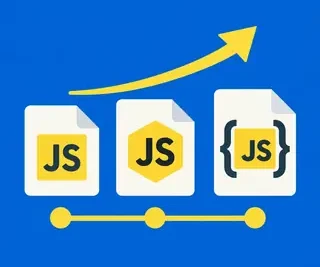 The Evolution of ECMAScript Standards - ES5, ES6, and Modern JavaScript
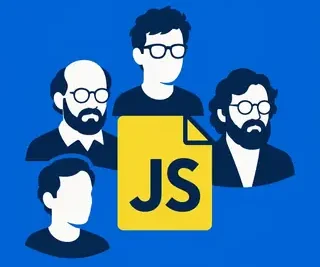 Key Figures in JavaScript History and Their Contributions
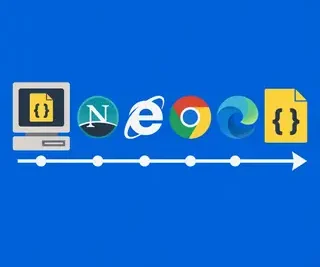 A History of JavaScript - From Netscape to ES6 and Beyond
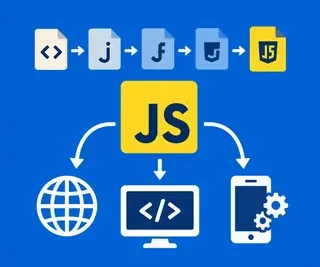 The Impact of JavaScript on the Web and Software Development
JavaScript History and Evolution – A Complete Guide
JavaScript has transformed from a simple browser scripting tool into the backbone of modern web development. At LearnJavaScriptQuickly, we explore how this language evolved, the pioneers who shaped it, and the ECMAScript standards that define today’s JavaScript. Whether you’re a beginner or an intermediate coder, understanding this history helps you write more efficient, future-proof code. Dive into our four core subcategories below to master JavaScript’s journey and practical applications.
📜 The Impact of JavaScript on the Web and Software Development
JavaScript’s rise from static-page enhancer to full-stack powerhouse has fundamentally changed how we build software. It powers dynamic interfaces, real-time apps, and server-side environments via Node.js, making it essential for front-end and back-end development. Its event-driven model enables responsive user experiences, while frameworks like React and Angular drive modern single-page applications. For learners, grasping this impact clarifies why JavaScript dominates hiring markets and startup ecosystems, and why mastering it unlocks roles in web, mobile (React Native), and even desktop apps (Electron).
🕰️ A History of JavaScript – From Netscape to ES6 and Beyond
JavaScript was born in 1995 at Netscape, created by Brendan Eich in just 10 days to add interactivity to browsers. From its early “LiveScript” days, it battled Microsoft’s JScript, leading to standardization through ECMAScript. The language matured slowly until 2015’s ES6 (ECMAScript 2015) introduced classes, arrow functions, and modules – a turning point for readability and scale. Since then, annual releases (ES2016+) have added modern features like async/await and optional chaining, making JavaScript a modern, powerful language that continues to evolve.
🧠 Key Figures in JavaScript History and Their Contributions
Behind every revolution are visionaries. Brendan Eich invented JavaScript. Douglas Crockford popularized JSON and wrote “JavaScript: The Good Parts,” shaping coding best practices. Ryan Dahl created Node.js, enabling server-side JavaScript. John Resig gave us jQuery, simplifying DOM manipulation. More recently, Jordan Walke invented React, and Vue’s Evan You offered a progressive framework. Understanding these contributors helps you appreciate the ecosystem’s foundations and why certain patterns exist, making you a more informed developer.
📏 The Evolution of ECMAScript Standards – ES5, ES6, and Modern JavaScript
ECMAScript is the standardized specification that JavaScript implements. ES5 (2009) brought strict mode and JSON support, improving reliability. ES6 (2015) was revolutionary – adding let/const, destructuring, promises, and classes. Modern JavaScript (ES2016–ES2024) continues this pace: async/await (ES2017), spread/rest (ES2018), optional chaining and nullish coalescing (ES2020), and array methods like at() (ES2022). For learners, staying current is vital – browsers and Node.js now support most modern syntax natively. We provide practical examples to help you adopt these features confidently.
Frequently Asked Questions
Why did JavaScript become so popular despite its early flaws?
JavaScript’s ubiquity in every web browser made it the only universal client-side language. Early flaws like inconsistent browser support were addressed through standardization (ECMAScript) and libraries like jQuery. Its flexibility, event-driven nature, and later server-side capabilities via Node.js solidified its dominance, creating a massive ecosystem that developers found indispensable.
What is the main difference between ES5 and ES6?
ES6 introduced major syntax improvements over ES5: block-scoped variables (let, const), arrow functions, template literals, classes, modules, and promises. ES5 used only var, function expressions, and callbacks. ES6 made code more readable, scalable, and easier to debug, setting the foundation for modern JavaScript development.
Do I need to learn JavaScript history to code effectively?
Not strictly, but it helps. Knowing why certain features exist (e.g., why var is problematic) prevents common bugs. Understanding the evolution of ECMAScript helps you adopt modern syntax and leverage new standard methods. It also allows you to read older codebases without confusion, making you a more versatile developer.
What is the latest ECMAScript version, and which features should I learn next?
As of 2025, the latest is ECMAScript 2024 (ES2024), with features like array grouping (groupBy) and new Promise.withResolvers. For beginners, prioritize ES2020–ES2022 additions: optional chaining, nullish coalescing, and replaceAll. For intermediates, explore ES2023/2024 methods like toSorted and with for immutability and cleaner array manipulation.
How has Node.js changed JavaScript’s role in software development?
Node.js (created in 2009) enabled JavaScript to run outside browsers, on servers. This unified language across front-end and back-end, reducing context switching and enabling full-stack development with one language. It also brought a massive package ecosystem (npm), fostering rapid innovation in APIs, microservices, and real-time apps, greatly expanding JavaScript’s impact on software engineering.