


JavaScript for Finance: Creating a Simple Income Statement
😊 Master JavaScript finance skills by building a simple income statement! This tutorial guides beginners and intermediate learners through creating a functional…
Read article

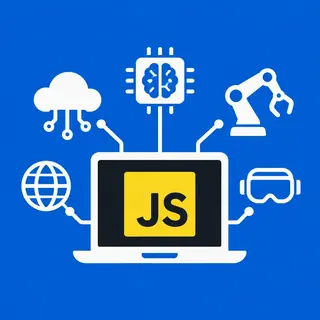
JavaScript is more than just a web language—it’s the driving force behind innovation in finance, education, healthcare, and e-commerce. From powering real-time trading dashboards and secure payment gateways to enabling interactive medical simulations and adaptive learning apps, JavaScript helps developers build fast, scalable, and user-friendly solutions tailored to industry-specific needs. Whether you’re creating a stock analysis tool, a virtual classroom, a patient monitoring system, or a full-fledged online store, mastering JavaScript unlocks endless opportunities to solve real-world problems. Explore how this versatile language transforms these sectors and discover practical tutorials and projects that prepare you for high-demand roles in modern tech.

😊 Master JavaScript finance skills by building a simple income statement! This tutorial guides beginners and intermediate learners through creating a functional…
Read article
😊 Boost your ecommerce site's speed and user experience with this JavaScript ecommerce search tutorial. Learn to build fast, efficient search functionality…
Read article
😊 Discover how JavaScript is revolutionizing healthcare! This beginner-friendly JavaScript medical device tutorial explores its crucial role in cutting-edge medical devices, offering…
Read article
😊 Learn to implement dynamic pricing strategies with our JavaScript tutorial! This guide provides step-by-step instructions and practical examples, empowering you to…
Read article
🤔 Master technical analysis with our JavaScript RSI MACD trading tutorial! Learn to implement these powerful indicators in JavaScript, building practical trading…
Read article
🤔 Unlock your JavaScript potential! This article explores the best JavaScript learning platforms, offering interactive tools and structured learning paths to accelerate…
Read articleJavaScript is no longer just a language for web animations—it now powers mission-critical systems across finance, education, healthcare, and e-commerce. On LearnJavaScriptQuickly, you’ll discover how the same syntax you’re learning can be applied to build trading dashboards, interactive classrooms, patient monitoring tools, and scalable online stores. This category bridges your coding skills with real-world industry demands, helping you stand out in specialized job markets. Explore each subcategory below to see practical use cases, code patterns, and career insights tailored to your learning pace.
In finance, JavaScript enables real-time data visualization, algorithmic trading interfaces, and risk management dashboards. You’ll learn how to use libraries like Chart.js and D3.js to render live stock prices, and how to connect to WebSocket APIs for low-latency updates. Expect tutorials on building order books, portfolio trackers, and candlestick charts. We also cover secure authentication and data validation to meet financial regulations. By the end, you’ll be able to prototype a mini trading platform that handles streaming data and user interactions smoothly.
Educational platforms rely on JavaScript to create quizzes, progress trackers, and collaborative whiteboards. Here, you’ll explore how to build drag-and-drop exercises, real-time coding challenges, and gamified lessons using React or Vue. We’ll demonstrate how to store learner progress with localStorage and sync it via REST APIs. You’ll also see how to integrate speech synthesis for language learning apps. These skills are directly transferable to building your own online course or tutoring tool.
JavaScript is increasingly used in patient portals, telemedicine interfaces, and medical device dashboards. This section focuses on handling sensitive data with encryption and compliance with standards like HIPAA. You’ll learn to create appointment schedulers, medication reminders, and interactive symptom checkers. We’ll also cover using Node.js for backend APIs that manage electronic health records. Practical examples include building a vital signs monitor that visualizes heart rate and blood pressure in real time—all with clean, accessible UI.
E-commerce is where JavaScript shines for product filtering, cart management, and checkout flows. You’ll learn to implement dynamic product galleries, price calculators, and inventory updates using localStorage or IndexedDB. We’ll guide you through integrating payment gateways like Stripe and PayPal via JavaScript SDKs. Expect projects like a mini storefront with search, sort, and pagination. Additionally, we cover performance optimization techniques—lazy loading images and code splitting—to keep your store fast and SEO-friendly, which is critical for conversions.
No. Each subcategory assumes you have basic knowledge of variables, functions, and DOM manipulation. We build up complexity gradually, so you can start with simple examples and scale to real-world features. Intermediate topics like async programming are introduced naturally within industry context.
For finance, start with Chart.js for simple charts, then move to D3.js if you need custom visualizations. For e-commerce, focus on vanilla JavaScript for DOM manipulation and then add React or Vue for component-based stores. Our tutorials compare both approaches to help you choose based on project size.
Yes, always encrypt data in transit and at rest. Use HTTPS, implement token-based authentication (JWT), and validate all user inputs. We teach you to sanitize HTML to prevent XSS attacks and to securely store patient data using environment variables. Following these practices protects both users and your reputation.
Absolutely. Use Node.js with Express for backend, and React or plain JavaScript for frontend. You can handle user accounts, product databases with MongoDB, and payment webhooks. Our tutorials include step-by-step integration guides for a complete stack, all in JavaScript.
Yes. Recruiters value candidates who can apply JavaScript to domain-specific problems. By showcasing a mini trading dashboard or a patient scheduler in your portfolio, you demonstrate both coding skill and industry awareness. We include career tips and common interview questions for each subcategory to boost your confidence.