JavaScript for Finance: Creating a Simple Income Statement
😊 Master JavaScript finance skills by building a simple income statement! This tutorial guides beginners and intermediate learners through creating a functional…
Read article

Discover how JavaScript powers modern finance by building real-time trading dashboards, algorithmic trading bots, and secure financial tools—all from scratch. This guide walks you through live market data integration, risk calculation models, and interactive charting with libraries like D3.js, making complex financial concepts accessible to developers at any level. Boost your portfolio of skills as you learn to handle high-frequency updates, implement order execution logic, and create user-friendly interfaces for brokers and investors. With practical examples and step-by-step projects, you’ll turn JavaScript’s event-driven architecture into your competitive edge in fintech—perfect for beginners eager to break into this high-demand industry or seasoned coders looking to specialize.
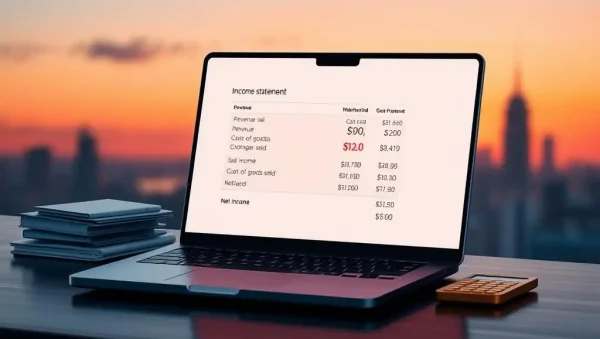
😊 Master JavaScript finance skills by building a simple income statement! This tutorial guides beginners and intermediate learners through creating a functional…
Read article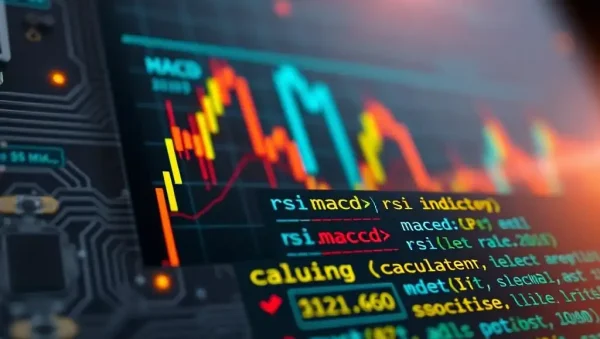
🤔 Master technical analysis with our JavaScript RSI MACD trading tutorial! Learn to implement these powerful indicators in JavaScript, building practical trading…
Read articleWelcome to the intersection of code and capital. In this subcategory, you’ll discover how JavaScript powers modern fintech—from algorithmic trading dashboards to risk calculators and portfolio trackers. Whether you’re a beginner exploring your first finance project or an intermediate developer aiming to break into the financial technology sector, these tutorials bridge core JS concepts with practical, industry-relevant implementations. You’ll learn to handle real-time data, manage asynchronous workflows, and create secure, user-friendly interfaces that meet regulatory expectations.
Financial applications demand precise number crunching and rapid data updates. Here, you’ll master high-precision arithmetic using libraries like Decimal.js to avoid floating-point errors common in currency calculations. You’ll also explore time-series manipulation with arrays and maps, plus event-driven programming to react to live market ticks. Expect hands-on examples: building a real-time price ticker, calculating moving averages, and implementing basic risk metrics like volatility.
Beyond syntax, you’ll learn best practices for handling large datasets without freezing the UI, using Web Workers and debouncing techniques. These skills are directly transferable to institutional tools where milliseconds matter. By the end of this section, you’ll confidently build a mini stock screener that filters stocks by P/E ratio, market cap, and daily volume—all in vanilla JavaScript.
Trading platforms live or die by real-time data. This section focuses on Promises, async/await, and WebSockets—the backbone of streaming price updates. You’ll implement a mock WebSocket server that pushes simulated trades, then build a client-side order book that updates in real time. Learn to handle reconnection logic, backpressure, and error recovery gracefully, ensuring your app never crashes during a volatile market session.
You’ll also integrate public financial APIs (e.g., Alpha Vantage or CoinGecko) using fetch and AbortController for timeouts. Practical project: create a cryptocurrency portfolio tracker that polls prices every 5 seconds, computes unrealized gains/losses, and alerts you via browser notifications when a price threshold is hit. This solidifies your async skills while producing a tangible, shareable tool.
Visualizing financial data is non-negotiable. Here, you’ll explore Canvas API for high-performance candlestick charts and SVG for lightweight, scalable line graphs. You’ll code zooming, panning, and crosshair tooltips from scratch—no external charting libraries. Focus on data mapping, axis scaling, and animation loops to create smooth 60fps updates. This deep dive makes you independent of heavy dependencies, a prized skill in performance-critical fintech.
You’ll also learn to overlay technical indicators like Bollinger Bands and RSI directly on your charts. By the end, you’ll have a custom-built chart component that renders 10,000 data points without lag. This is your stepping stone to advanced visualization frameworks like D3.js, but you’ll understand the underlying mechanics first—making you a stronger problem solver in any stack.
Money attracts attackers. This section covers client-side validation for forms (e.g., trade tickets), sanitization of user inputs to prevent XSS, and secure storage of sensitive data using the Web Crypto API. You’ll implement rate limiting for API calls and learn about Content Security Policy (CSP) headers to protect your app from script injection. Real-world example: building a two-factor authentication (2FA) TOTP generator in pure JavaScript—a common requirement for trading dashboards.
Beyond coding, you’ll understand audit trails and immutable logging to meet compliance standards like PCI-DSS. These practices aren’t just nice-to-haves—they’re legal necessities for any financial interface. By applying these defensive techniques, you’ll produce tools that inspire user trust and stand up to penetration testing, a critical differentiator in your portfolio.
Bring everything together in a capstone project. You’ll build a paper trading simulator using Node.js and Express for the backend, with a vanilla JS frontend. Features include a virtual cash balance, buy/sell orders, a live order book from simulated market data, and a portfolio performance tracker. You’ll implement RESTful endpoints for trade execution and use localStorage to persist user sessions. This project demonstrates your ability to integrate frontend, backend, and real-time mechanics—a complete fintech MVP.
You’ll also add a simple backtesting engine that lets users test a moving-average crossover strategy on historical data. This teaches you to separate logic from UI, structure code for testability, and write unit tests using Jest. The final result: a polished, deployable app you can showcase on GitHub or Vercel, proving you’re ready for junior front-end or full-stack roles in finance. Each step is documented, so you can pause and revisit tricky parts.
No, but basic algebra and an understanding of percentages are helpful. The tutorials break down formulas like moving averages and volatility step-by-step. You’ll learn to translate math into code using simple loops and array methods. For complex calculations, we introduce libraries like Decimal.js so you don’t reinvent the wheel. Start with the fundamentals, and you’ll grow into more advanced concepts naturally.
Absolutely. The concepts—async data, charting, security, and state management—are universal. Cryptocurrency exchanges rely heavily on WebSockets for live prices, which we cover in depth. The project simulator can easily be adapted to use crypto APIs like CoinGecko instead of stock data. You’ll also learn to handle 24/7 market dynamics and high-frequency updates, which are core to crypto platforms.
Canvas is pixel-based and better suited for large datasets (e.g., 10,000+ candles) because it redraws faster. SVG is vector-based and ideal for interactive elements like tooltips or zooming, plus it’s accessible for screen readers. We teach both, so you can choose based on your use case. For a trading dashboard, many developers use Canvas for the main chart and SVG for overlays—our tutorials show that hybrid approach.
No, never store API keys or private keys in client-side code. We emphasize using backend proxies (Node.js) to keep secrets server-side. All client-side logic should only use public market data. For user authentication, we demonstrate Web Crypto API for hashing, but the actual storage remains on your secure server. Our security section teaches you to separate concerns and minimize attack surface.
While we focus on web-based tools, the core JavaScript logic transfers directly to React Native or Ionic. We stick to vanilla JS for teaching, so you understand every line. For mobile-specific features like push notifications, you’d add native wrappers. Once you master the web versions, porting to a mobile wrapper is a weekend project—plus your portfolio gains cross-platform flexibility.