JavaScript in Healthcare: Transforming Medical Technology
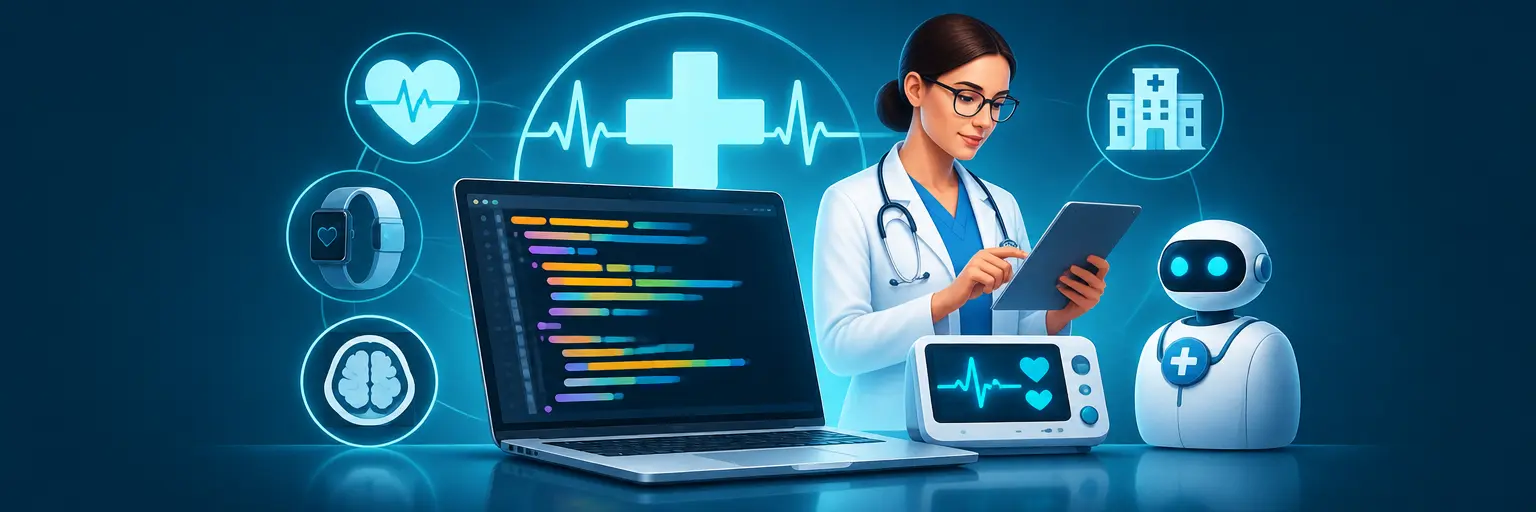
JavaScript is no longer just for websites—it’s a driving force behind modern healthcare innovation. From patient portals to real-time monitoring dashboards, this versatile language powers applications that improve diagnosis, treatment, and patient outcomes. For developers on LearnJavaScriptQuickly, exploring this subcategory reveals how JavaScript’s flexibility meets critical medical needs, creating tools that are both secure and user-friendly. Below, we dive into the most practical applications, real-world examples, and career opportunities waiting for you in this exciting intersection of code and care.
🩺 Real-Time Patient Monitoring Dashboards
JavaScript enables live data visualization in hospital settings, turning raw vitals like heart rate, blood pressure, and oxygen levels into intuitive charts and alerts. Libraries such as Chart.js and D3.js render streaming data with minimal latency, helping clinicians react instantly to anomalies. You’ll learn how to integrate WebSockets with Node.js to push updates from medical devices to browsers, all while adhering to HIPAA-compliant encryption.
Expect hands-on projects like building a mock ICU monitor that displays ECG waveforms and triggers visual alarms. We’ll cover performance optimization for low-power devices, plus how to handle offline modes in rural clinics. This section is perfect for developers who love combining real-time logic with meaningful impact, preparing you for roles in health-tech startups and telemedicine platforms.
🧠 AI-Assisted Diagnostic Tools
JavaScript’s integration with TensorFlow.js brings machine learning to the browser, allowing patient data to be analyzed without server-side privacy risks. You’ll explore how neural networks can classify medical images—like detecting diabetic retinopathy from retinal scans—or predict sepsis onset from electronic health records. This subcategory focuses on deploying pre-trained models and fine-tuning them with JavaScript-specific APIs.
Through step-by-step tutorials, you’ll build a simple symptom checker that uses natural language processing to suggest potential conditions. We’ll discuss model interpretability, bias reduction, and regulatory considerations like FDA approval pathways. By the end, you’ll have a portfolio-ready project demonstrating how JavaScript makes advanced diagnostics accessible to smaller clinics worldwide.
💊 Electronic Health Records (EHR) User Interfaces
Modern EHR systems are notoriously complex, but JavaScript’s component-based frameworks—React, Vue, and Angular—simplify navigation, search, and data entry. Here, you’ll learn to design dashboards that reduce clinician burnout by prioritizing glanceable information. We’ll cover drag-and-drop form builders, auto-suggest medication lists, and secure session handling with OAuth 2.0 and JWT tokens.
Expect to create a prototype EHR module with patient demographics, lab results, and prescription refills. We’ll also touch on accessibility standards (WCAG 2.1) and interoperability via HL7 FHIR APIs, making your interfaces connect seamlessly with existing hospital systems. This skill set is in high demand, as healthcare organizations constantly seek to modernize legacy platforms.
🧪 Remote Patient Support & Telemedicine Apps
Telehealth exploded post-pandemic, and JavaScript powers many of its front-end interactions—from video call widgets to appointment scheduling. You’ll discover how to integrate WebRTC for peer-to-peer video, plus use Socket.io for chat and waiting rooms. This subcategory emphasizes UX design for elderly patients, including large fonts, voice commands, and simplified form validation.
Your project will be a mini telemedicine app with a doctor-patient chat, prescription upload, and follow-up reminders. We’ll cover state management with Redux or Zustand, plus testing with Cypress to ensure reliability under poor network conditions. These skills open doors to remote-first health startups and home-care monitoring companies looking for responsive, compassionate tech.
📊 Wearable Device Data Integration
Wearables like fitness trackers and smartwatches generate enormous streams of health data. JavaScript bridges this trove by using Bluetooth Low Energy (BLE) APIs in browsers and Node.js backend services. You’ll learn to parse raw accelerometer and heart-rate signals, then visualize trends over time using time-series libraries like Plotly.js. Security is paramount—we’ll show you how to anonymize data and manage user consent.
Build a hands-on dashboard that syncs mock wearable data, calculates step counts, and flags irregular heart rhythms. We’ll also discuss cloud storage options (Firebase, AWS) and how to create alerts via push notifications. For job seekers, this niche merges IoT expertise with healthcare, making you valuable to companies like Fitbit, Apple Health, or startup wellness platforms.
🔐 Security & Compliance in Medical JavaScript
Nothing is more critical in healthcare than data protection. This section dives deep into encryption, authentication, and audit logging specific to JavaScript apps. You’ll implement AES-256 encryption for patient records, manage multi-factor authentication, and ensure your code passes OWASP checks. We’ll also explore HIPAA’s technical safeguards and how to write secure code reviews.
Through simulated breaches and fixes, you’ll learn to identify XSS and SQL injection vulnerabilities in React forms and Node.js APIs. Additionally, we’ll cover GDPR compliance for international users and how to design privacy dashboards. By mastering these practices, you become a trusted developer who can confidently work with sensitive medical data—a huge plus for employers.
Frequently Asked Questions
Do I need prior medical knowledge to learn JavaScript in healthcare?
No, but basic domain awareness helps. Our tutorials explain medical terms and workflows in plain language, focusing on technical implementation. You’ll pick up key concepts like vital signs and privacy rules as you build projects. A background in biology is optional—problem-solving skills matter more.
Which JavaScript frameworks are most used in medical tech?
React dominates due to its component reuse and massive ecosystem, followed by Vue for lightweight interfaces and Angular for enterprise-grade apps. Node.js is foundational for backend APIs and WebSockets. Libraries like D3.js and TensorFlow.js add specialized value. Focus on React or Vue first, then layer others as needed.
How do I ensure my healthcare JavaScript app meets legal standards?
Follow best practices: encrypt all data in transit and at rest, implement role-based access control, and log access events. For the U.S., study HIPAA technical safeguards; for Europe, GDPR. Use libraries like Helmet.js and express-rate-limit. Always consult a compliance officer before deployment, but our security section covers code-level essentials.
Can I build a complete telemedicine platform solely with JavaScript?
Absolutely. Use React for the frontend, Node.js with Express for APIs, Socket.io for real-time chat, and WebRTC for video. For storage, MongoDB or PostgreSQL. Add authentication via Passport.js. You can also integrate payment gateways with Stripe. While you’ll need hosting and monitoring, the stack is fully JavaScript-based.
What career roles can this subcategory lead to?
You could become a health-tech front-end developer, IoT device integration engineer, or clinical data visualization specialist. Many companies hire JavaScript developers to build EHR interfaces, remote monitoring tools, or AI diagnostic dashboards. Freelance opportunities also exist for building prototypes for medical startups.