
JavaScript Fundamentals
Master JavaScript from the ground up with our hands-on tutorials, real-world exercises, and mini-projects designed to get you coding fast. Whether you're setting up your first script in the browser or exploring server-side logic with Node.js, we break down complex topics like closures, prototypes, asynchronous patterns, and even engine internals into digestible lessons. Learn to write cleaner, more efficient code by mastering error handling, regular expressions, and functional programming techniques, while also diving into advanced areas such as metaprogramming with Proxies, multithreading via Web Workers, and memory management for optimized performance. Our step-by-step approach covers essential syntax, data structures, and design patterns, ensuring you build a solid foundation and gain the confidence to tackle any JavaScript challenge—quickly and effectively. Perfect for beginners and intermediate learners aiming to level up their skills in today’s most versatile programming language.
 JavaScript Syntax and Basic Constructs
 Data Structures in JavaScript - Maps and Sets
 Variables, Data Types, and Operators in JavaScript
 Internationalization and Localization in JavaScript (i18n and l10n)
 Prototypes and Inheritance in JavaScript
 Functional Programming in JavaScript - Pure Functions, Immutability
 Advanced JavaScript Concepts - Closures and Scope
 Control Flow - Conditionals and Loops
 Working with JavaScript Objects - Properties and Methods
 Modules and Packages in JavaScript
 Arrays in JavaScript - Methods and Manipulation
 Metaprogramming in JavaScript - Proxies and Reflect API
 Design Patterns in JavaScript - Creational, Structural, Behavioral
 Regular Expressions in JavaScript
 Error Handling in JavaScript - Try, Catch, Finally
 JavaScript Engine Internals - V8, SpiderMonkey, JavaScriptCore
 Memory Management in JavaScript - Garbage Collection Deep Dive
 Web Workers and Multithreading in JavaScript
 Functions in JavaScript - Declarations and Expressions
 JavaScript Environments - Browser vs Node.js
Master JavaScript Fundamentals with LearnJavaScriptQuickly
Welcome to the JavaScript Fundamentals hub on LearnJavaScriptQuickly, your go-to resource for mastering the core building blocks of the world’s most popular programming language. Whether you’re a complete beginner or an intermediate coder looking to solidify your knowledge, this category provides structured, step-by-step tutorials, practical exercises, and real-world projects. Each subcategory breaks down complex topics into digestible lessons, helping you write cleaner, more efficient, and more maintainable JavaScript code. Dive in to accelerate your learning journey today.
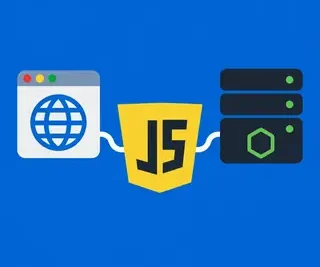
JavaScript Environments - Browser vs Node.js 🌐
Understanding the runtime environment is crucial for any JavaScript developer. In the browser, JavaScript interacts with the DOM, handles user events, and runs on the client side. In Node.js, it powers servers, file systems, and network operations. This subcategory explains the key differences, from global objects like window vs process to module systems (ESM vs CommonJS). You’ll learn when to use each environment, how to debug effectively, and best practices for cross-environment code. Perfect for beginners transitioning from front-end to back-end development.
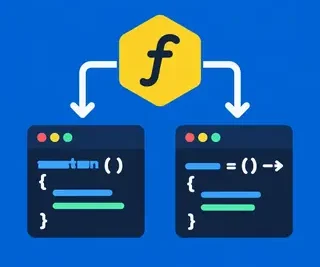
Functions in JavaScript - Declarations and Expressions 🛠️
Functions are the heart of JavaScript logic. This section covers function declarations, function expressions, arrow functions, and higher-order functions. You’ll explore hoisting behavior, scope, and the this keyword variations. Practical examples demonstrate how to write reusable, modular code and avoid common pitfalls like callback hell. By mastering these fundamentals, you’ll be ready to tackle closures, currying, and async patterns with confidence.
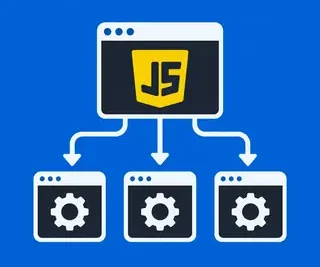
Web Workers and Multithreading in JavaScript ⚙️
JavaScript is single-threaded, but Web Workers enable background processing for heavy tasks. This subcategory teaches you how to spawn dedicated workers, communicate via postMessage, and handle shared memory with SharedArrayBuffer. You’ll learn when to offload tasks like image processing or data parsing to improve UI responsiveness. We also cover service workers for offline capabilities and best practices for error handling in parallel executions. Boost your app’s performance by implementing true concurrency today.
Memory Management in JavaScript - Garbage Collection Deep Dive 🧠
Efficient memory use prevents crashes and slowdowns. This deep dive explains how JavaScript’s garbage collector works, focusing on mark-and-sweep and generational collection. You’ll identify memory leaks caused by closures, detached DOM nodes, and global variables. We provide debugging tools using Chrome DevTools’ memory profiler and practical strategies to optimize your code’s memory footprint. Master these concepts to build scalable, long-running applications.
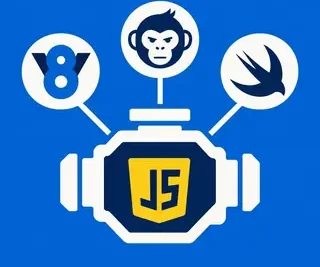
JavaScript Engine Internals - V8, SpiderMonkey, JavaScriptCore 🔧
Ever wondered how your code becomes machine instructions? This subcategory peels back the layers of popular engines like Chrome’s V8, Firefox’s SpiderMonkey, and Safari’s JavaScriptCore. You’ll learn about JIT compilation, inline caching, and hidden classes. Understand how optimization tiers (interpreter to optimizing compiler) affect performance. Examples show how writing predictable code helps engines optimize faster. Gain a competitive edge by knowing what happens under the hood.
Error Handling in JavaScript - Try, Catch, Finally 🚨
Robust error handling separates professional code from amateur scripts. This section covers try-catch-finally blocks, custom error objects, and the Error class hierarchy. You’ll learn to throw meaningful errors, handle synchronous and asynchronous failures (promises, async/await), and propagate errors correctly. We also discuss best practices for logging, user-friendly messages, and fail-safe designs. Write resilient applications that gracefully recover from unexpected issues.
Regular Expressions in JavaScript 🔍
Regular expressions (regex) are powerful for pattern matching, validation, and text manipulation. This subcategory demystifies syntax, flags, and methods like test(), exec(), and replace(). You’ll build patterns for emails, URLs, phone numbers, and more. We cover lookaheads, non-capturing groups, and Unicode handling. Practical exercises reinforce learning, and performance tips prevent catastrophic backtracking. Master regex to save hours of tedious string parsing.
Design Patterns in JavaScript - Creational, Structural, Behavioral 🏗️
Design patterns provide reusable solutions to common programming problems. This subcategory explores creational patterns like Singleton and Factory, structural patterns like Adapter and Proxy, and behavioral patterns like Observer and Strategy. Each pattern is explained with practical JavaScript examples, showing how to improve code scalability and maintainability. You’ll learn when to apply patterns and when to avoid over-engineering. Elevate your architecture skills and write code that teammates will love.
Metaprogramming in JavaScript - Proxies and Reflect API 🪄
Metaprogramming lets you manipulate objects dynamically. The Proxy object and Reflect API are game-changers. This section teaches you to intercept operations like property access, assignment, and function calls. Use cases include validation, logging, and reactive data binding. You’ll build computed properties, implement virtual arrays, and create middleware-like systems. Understand the subtle differences between Proxy traps and native behavior. Unlock advanced features that power modern frameworks.
Arrays in JavaScript - Methods and Manipulation 📚
Arrays are ubiquitous in JavaScript. This subcategory covers essential methods like map(), filter(), reduce(), and modern additions like flatMap() and at(). You’ll learn about mutating vs non-mutating operations, performance considerations, and common pitfalls like sparse arrays. We also discuss typed arrays for binary data and array-like objects (arguments, NodeList). Practical examples show how to manipulate complex data structures efficiently.
Modules and Packages in JavaScript 📦
Organize your code with ES modules and npm packages. This subcategory explains import and export syntax, default vs named exports, and dynamic imports for code splitting. You’ll set up a package.json, manage dependencies, and publish your own packages. We cover bundlers like Webpack and Vite, as well as Node’s module resolution. Learn to structure large projects with clear boundaries and reuse code across projects seamlessly.
Working with JavaScript Objects - Properties and Methods 🧩
Objects are fundamental to JavaScript. This section dives into object literals, property descriptors, getters/setters, and the Object class methods. You’ll learn about property enumeration, copying, and freezing objects to prevent mutation. We also cover `this` binding patterns and rest/spread for objects. Practical examples demonstrate how to create factory functions and mixins. Build more expressive and flexible data models with confidence.
Control Flow - Conditionals and Loops 🔄
Control flow governs the execution order of your code. This subcategory explains if-else, switch, ternary operators, and loops like for, while, do-while, and for-of. You’ll learn about break, continue, and labeled statements. We discuss performance implications and modern alternatives like array.forEach(). Write clearer, more efficient conditionals and iterations with hands-on examples and best practices.
Advanced JavaScript Concepts - Closures and Scope 🔒
Closures and scope are critical for mastering JavaScript. This deep dive explains lexical scoping, global vs local variables, and hoisting intricacies. You’ll understand how closures allow data encapsulation and enable patterns like module factories and counter generators. We cover block-scoped let and const versus var quirks. Practical exercises demonstrate how to avoid common closure mistakes and leverage them for private state. Elevate your problem-solving skills.
Functional Programming in JavaScript - Pure Functions, Immutability 🧮
Functional programming (FP) promotes cleaner, more predictable code. This subcategory introduces pure functions, immutability, and higher-order functions like map, filter, and reduce. You’ll learn about function composition, currying, and partial application. We discuss how to manage side effects and state with immutable data structures. Practical examples show how FP simplifies debugging and testing. Transform your coding style for better scalability.
Prototypes and Inheritance in JavaScript 🧬
JavaScript uses prototype-based inheritance, distinct from class-based languages. This section explains prototype chains, __proto__ vs Object.getPrototypeOf(), and the modern class syntax as syntactic sugar. You’ll learn about constructor functions, Object.create(), and how to implement inheritance correctly. We cover mixins and composition as alternatives to inheritance. Understand how frameworks like React use prototypes under the hood to write more idiomatic code.
Internationalization and Localization in JavaScript (i18n and l10n) 🌍
Reach a global audience with proper i18n. This subcategory covers the Intl API for dates, numbers, and currencies, plus string collation and pluralization rules. You’ll implement locale-specific date formats, number separators, and relative time strings. We discuss best practices for managing translation files and dynamic content. Practical examples show how to build a multilingual app without external libraries. Make your software feel native to users worldwide.
Variables, Data Types, and Operators in JavaScript 🔢
Everything starts with data. This foundational section explains var, let, and const scoping, plus primitive types: string, number, boolean, null, undefined, symbol, and bigint. You’ll learn about type coercion, equality operators (== vs ===), and arithmetic, logical, and assignment operators. We cover truthy/falsy values and best practices for type checking. Master these basics to avoid subtle bugs and write assertive code.
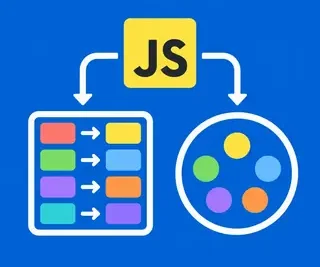
Data Structures in JavaScript - Maps and Sets 🗂️
Go beyond arrays and objects with built-in data structures. This subcategory explores Map for key-value pairs with insertion order, and Set for unique values. You’ll learn about WeakMap and WeakSet for garbage-collectable keys. We discuss performance benefits, iteration methods, and common use cases like caching and deduplication. Practical examples show how to choose the right structure for your problem. Optimize your algorithms with these powerful tools.
JavaScript Syntax and Basic Constructs ✍️
Start from ground zero with the language’s core syntax. This section introduces statements, expressions, comments, and semicolon rules. You’ll grasp variable declarations, arithmetic and string operations, template literals, and destructuring. We cover typeof, instanceof, and type conversion techniques. Small projects and quizzes reinforce learning. Perfect for absolute beginners to build a solid syntax foundation before diving into advanced topics.
Frequently Asked Questions
Do I need to learn Node.js to understand JavaScript fundamentals?
No, you can start with browser-based JavaScript. However, Node.js introduces backend APIs and modules, which broaden your capabilities. Learn fundamentals first, then explore Node for server-side work. Our tutorials are environment-agnostic, so you can apply concepts anywhere.
What’s the best way to practice JavaScript fundamentals daily?
Write small scripts, solve coding challenges on platforms like Codewars or LeetCode, and build mini-projects like a to-do list. Consistent practice of 30 minutes per day beats occasional marathon sessions. Use our exercises and project ideas for guided learning.
How do closures differ from regular functions?
Closures are functions that remember their lexical scope even when executed outside it. They “close over” variables, allowing private state. Regular functions don’t retain scope after execution. Closures enable patterns like memoization and module patterns.
Why is immutability important in JavaScript?
Immutability reduces bugs by preventing accidental state changes. It simplifies debugging, makes code more predictable, and benefits concurrent or reactive programming. Use const, Object.freeze(), or libraries like Immutable.js to enforce it.
Can I use JavaScript for both frontend and backend?
Absolutely. JavaScript runs in browsers for frontend and Node.js for backend. With frameworks like React for UI and Express for servers, you can build full-stack applications using one language. Learn fundamentals to transition seamlessly between environments.