

Debugging Your JavaScript Mobile Games: Tips and Best Practices
😊 Mastering JavaScript mobile game development? Learn essential debugging techniques and best practices to swiftly identify and squash those pesky bugs. This…
Read article
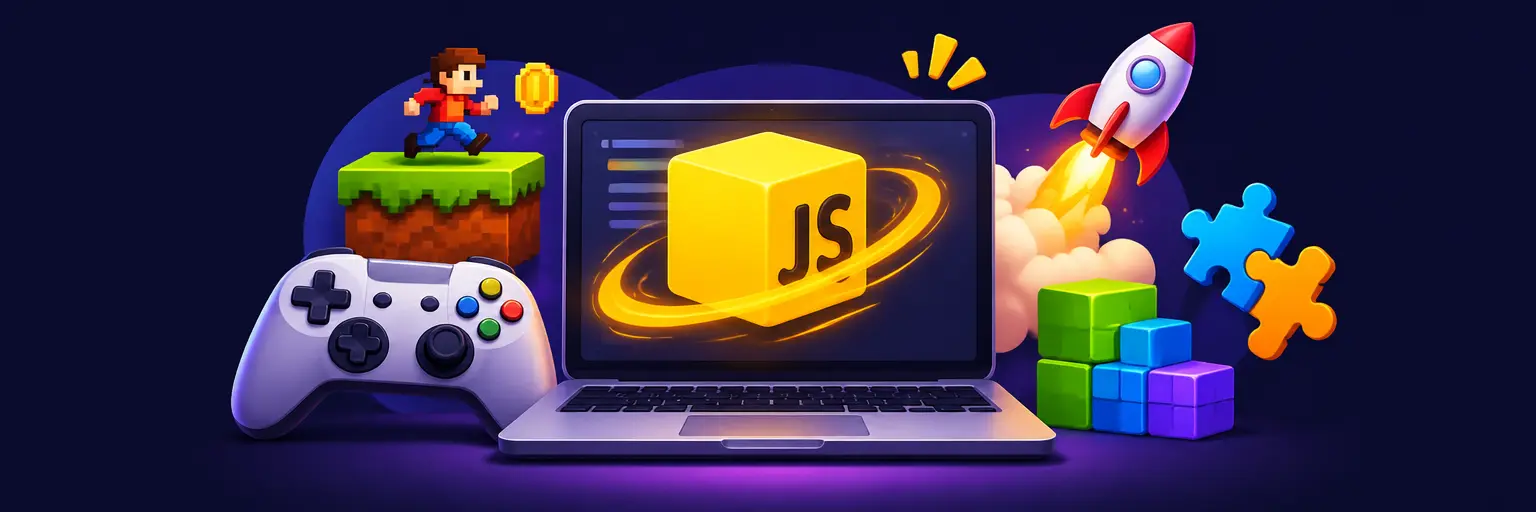
Ready to turn your coding skills into playable, interactive experiences? 🕹️ This is the ultimate launchpad for building JavaScript for Web Games & Mini-Projects—where you’ll go from static scripts to dynamic, browser-based worlds. Master the art of the game loop, handle user input like a pro, and bring your ideas to life with the Canvas API for buttery-smooth 2D graphics. Whether you’re crafting a simple calculator, an interactive form with smart validation, or exploring physics, collision detection, and even AI pathfinding, every tutorial is step-by-step and project-based. Dive into popular frameworks like Phaser, PixiJS, and Three.js for 3D adventures, or keep it lightweight with vanilla JavaScript. From adding sound effects and background music to testing for quality assurance and implementing monetization strategies, we cover the full journey—including game jams and portfolio-ready project ideas. Learn fast, build faster, and start shipping mini-games that wow. 🚀

😊 Mastering JavaScript mobile game development? Learn essential debugging techniques and best practices to swiftly identify and squash those pesky bugs. This…
Read article
😊 Craft compelling narratives for your JavaScript games! This tutorial explores techniques for immersive storytelling, guiding you from basic narrative structures to…
Read article
😊 Elevate your JavaScript game with immersive voiceovers! This tutorial provides a step-by-step guide to seamlessly integrating audio, transforming your projects from…
Read article
😊 Boost your JavaScript skills by building a functional calculator! This project provides a hands-on approach to mastering core concepts, perfect for…
Read article
😊 Master responsive JavaScript game controls! This tutorial unveils the secrets to creating smooth, reliable controls that adapt perfectly to any screen…
Read article
😊 Level up your JavaScript games! This article delivers practical tips and tricks to optimize JavaScript game AI performance, boosting responsiveness and…
Read article
😊 Elevate your JavaScript 3D game development! Learn how integrating realistic environmental sound effects dramatically boosts player immersion, creating a more captivating…
Read article
😊 Unlock the power of data visualization! This tutorial introduces JavaScript chart library beginners to essential charting techniques for personal projects. Learn…
Read article
🤔 Master precise JavaScript game timing control! Learn how frame rate and game speed directly impact player experience, and discover techniques to…
Read article
😊 Master robust JavaScript form submission! This tutorial tackles advanced error handling techniques, ensuring smooth user experiences and preventing common pitfalls in…
Read article
😊 Elevate your Phaser 3 game development skills with TypeScript! This tutorial provides a step-by-step guide to integrating TypeScript for enhanced type…
Read article
😊 Learn to build a functional JavaScript canvas inventory system! This tutorial simplifies inventory management, guiding you through a step-by-step process to…
Read articleWelcome to the JavaScript for Web Games & Mini-Projects category at LearnJavaScriptQuickly. Here, you’ll transform your coding skills into interactive, playable experiences. From building a simple calculator to crafting full 3D worlds, this hub covers essential frameworks, game loops, physics, user input, and even monetization. Each subcategory is packed with step-by-step tutorials, practical examples, and project ideas, perfect for beginners and intermediate learners looking to solidify JavaScript through fun, hands-on creation.
This subcategory demystifies the Canvas API, your gateway to drawing shapes, sprites, and backgrounds directly in the browser. You’ll learn to manipulate pixels, create smooth animations using requestAnimationFrame, and handle redrawing cycles efficiently. Expect practical guides on rendering game objects, rotating characters, and building particle effects, all with clean, reusable code.
Quality is key in game development. Here, you’ll discover automated testing techniques with frameworks like Jest or Mocha, plus manual debugging strategies for timing, collisions, and performance. We cover unit tests for game logic, integration tests for user interactions, and how to profile memory usage. By the end, you’ll be able to ship polished, bug-free browser games that run smoothly across devices.
Stop reinventing the wheel. This section compares Phaser (2D scenes and physics), PixiJS (lightweight rendering), and Babylon.js (powerful 3D engines). You’ll get quick-start templates, syntax comparisons, and project recommendations for each. Whether you’re building a platformer or a 3D dungeon crawler, you’ll know which tool fits your needs and how to leverage its built-in features for faster development.
This classic mini-project is perfect for beginners. You’ll walk through creating a fully functional calculator with HTML, CSS, and vanilla JavaScript. Learn to handle button events, manage operation order, and display results dynamically. We also cover keyboard support and error handling for division by zero, ensuring your calculator feels professional and responsive.
Interactive forms are essential for web games (think login screens or high-score entry). This subcategory teaches you client-side validation using regex patterns, custom error messages, and real-time feedback. You’ll also master AJAX submission with fetch API, handling async responses, and preventing duplicate submissions. Perfect for adding secure, user-friendly interfaces to any project.
Dive into the third dimension with Three.js. You’ll learn to create scenes, cameras, lighting, and 3D objects from scratch. We cover loading textures, animating meshes, and implementing basic first-person controls. By the end, you’ll have a small 3D world with a moving character, setting the foundation for more complex games or visualizations.
Turn your hobby into income. This section explores practical ad integration (like Google AdSense or pre-roll ads) and in-app purchases for premium features or virtual goods. You’ll learn how to integrate payment APIs (Stripe or PayPal), implement subscription models, and balance user experience with revenue. We also discuss legal considerations and analytics for tracking earnings.
Start from zero. This foundational subcategory covers the basics of game architecture, including game loops, sprite management, and collision detection. You’ll build your first simple game—like a bouncing ball or a clicker—using Canvas and vanilla JS. Each lesson emphasizes readability, modular code, and best practices, preparing you for more advanced frameworks later.
Reach players on the go. This subcategory introduces mobile-friendly frameworks like Phaser (with touch support) and Cordova or Capacitor for packaging as native apps. You’ll learn responsive design, touch event handling, and performance optimization for slower devices. Expect practical tips on handling screen sizes, orientation changes, and mobile-specific APIs like vibration.
Make your enemies smart. This advanced section teaches artificial intelligence for NPCs using state machines and decision trees. You’ll also implement pathfinding algorithms like A* and Dijkstra for grid-based movement. Code examples include enemy patrol patterns, seeking behavior, and obstacle avoidance, all optimized for real-time gameplay.
Responsive controls make games playable. Here, you’ll master keyboard events (keydown, keyup) and mouse events (click, mousemove) with proper polling for game loops. We cover preventing default browser actions, handling multiple key presses simultaneously, and touch equivalents for mobile. You’ll build a control scheme that feels instant and accurate.
The heartbeat of any game. This subcategory explains the requestAnimationFrame loop, delta time computation, and fixed timestep updates. You’ll learn to separate updates from rendering for smooth, deterministic gameplay. We also discuss frame rate independence and how to avoid janky animations, ensuring your game runs at 60 FPS on most hardware.
Get inspired and build fast. This section lists upcoming game jams (like Ludum Dare) and provides dozens of mini-project ideas with difficulty ratings—from memory card games to endless runners. You’ll learn time-management strategies for jams, how to scope projects, and how to showcase your work. Perfect for building a portfolio or just having fun.
Nothing feels worse than floating movement. This subcategory covers velocity, acceleration, and friction for realistic motion. You’ll implement axis-aligned bounding box (AABB) collision detection, resolve overlaps, and add simple gravity. We also touch on circle-to-circle collisions and spatial partitioning for performance. Build a bouncing ball or a platformer character with confidence.
Audio elevates immersion. You’ll learn to use the Web Audio API for generating sound effects (beeps, explosions) and controlling volume, panning, and playback rate. We cover preloading audio files, managing multiple sounds, and syncing music to game events. Includes tips on royalty-free sound sources and optimizing file sizes for quick loading.
Beyond games, mini-projects often include dashboards. This subcategory teaches Chart.js and D3.js for creating interactive bar charts, line graphs, and pie charts. You’ll fetch JSON data, animate transitions, and handle tooltips. Perfect for adding a stats screen to your game or building a standalone analytics tool.
Great mechanics need great design. This section covers player motivation, difficulty curves, and feedback loops. You’ll learn about level design, reward structures, and UI/UX tips specific to web games. We also discuss color theory and typography for accessible interfaces. Use these principles to make your projects addictive, not just functional.
Yes, basic HTML for structuring elements and CSS for styling are essential. Most tutorials assume you can create buttons, divs, and a canvas element. If you’re new, spend a day reviewing fundamentals like selectors and box model—then dive right in.
Start with Phaser due to its extensive documentation, built-in physics, and active community. It handles rendering and input, so you focus on game logic. PixiJS is faster but lower-level, while Babylon.js is ideal if you want 3D from the start.
Absolutely. Three.js is a JavaScript library that provides a 3D engine in the browser. You’ll manage scenes, cameras, and lighting manually, but it’s fully capable of complex 3D games. Performance depends on your code and hardware, not your choice of engine.
Use browser dev tools to inspect console errors and profile frames per second. Write unit tests for pure logic functions (e.g., collision detection) and integration tests for UI flows. Tools like Playwright can automate user interactions. For performance, monitor memory and CPU during gameplay.
Yes, through ads (display or rewarded video) and in-app purchases like skins or extra lives. You can also use sponsorship deals or offer a premium, ad-free version. However, success requires decent traffic, so focus on making engaging games that people share.