GraphQL API Use Cases: JavaScript Solutions for RealTime Data
😊 Master real-time data updates with JavaScript! This tutorial explores practical GraphQL API use cases, providing clear JavaScript GraphQL API examples and…
Read article

GraphQL APIs are transforming how developers build and consume web applications, offering a flexible, efficient alternative to traditional REST. Unlike fixed endpoints, GraphQL lets you query exactly the data you need in a single request—eliminating over-fetching and under-fetching while speeding up development. This guide explores the key advantages—like strongly typed schemas, real-time subscriptions, and better versioning control—along with practical use cases for modern apps, from mobile backends to complex dashboards. Whether you’re just starting with APIs or looking to upgrade your JavaScript stack, understanding GraphQL unlocks cleaner code, faster iteration, and a smoother developer experience. Dive in to see how it can power your next project!

😊 Master real-time data updates with JavaScript! This tutorial explores practical GraphQL API use cases, providing clear JavaScript GraphQL API examples and…
Read article
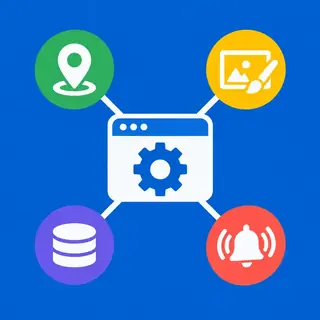
😊 Seamlessly integrate databases and services with your JavaScript applications using GraphQL APIs. This JavaScript GraphQL API tutorial explores practical use cases,…
Read articleWelcome to this dedicated subcategory on Exploring GraphQL APIs, part of our broader guide to APIs, AJAX & Web Application Development at LearnJavaScriptQuickly. If you’re transitioning from REST or just starting with modern API design, this section breaks down how GraphQL offers a more flexible, efficient alternative for fetching data in JavaScript applications. Here, you’ll discover why major tech companies adopt GraphQL, how it simplifies client-server communication, and practical scenarios where it shines—all explained with beginner-friendly examples and hands-on JavaScript code snippets. Whether you’re building a small project or scaling a production app, these insights will help you decide if GraphQL is the right tool for your next web development task.
GraphQL’s biggest selling point is its single endpoint design, which eliminates the need for multiple REST routes. Instead of fetching several resources with separate GET requests (which often leads to over-fetching or under-fetching), GraphQL lets you query exactly the fields you need in one shot. For JavaScript developers using fetch or Axios, this means fewer network round-trips, faster page loads, and cleaner code. Additionally, GraphQL is strongly typed, providing automatic validation and self-documenting schemas—ideal for team collaboration and catching errors early during development.
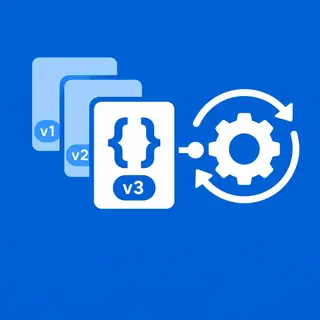
Another advantage is versioning flexibility. REST requires new endpoints for every change (e.g., /api/v2/users), but GraphQL allows you to deprecate fields without breaking existing clients. This is a massive win for maintaining long-term projects. You also get real-time capabilities out of the box via subscriptions, perfect for chat apps or live dashboards. For beginners, the learning curve is moderate, but the payoff is a more predictable data layer. In JavaScript, tools like Apollo Client simplify state management, caching, and error handling—making GraphQL a robust choice for React, Vue, or plain Node.js environments.
GraphQL is not a silver bullet, but it excels in data-intensive applications. A prime use case is mobile apps, where bandwidth is limited; GraphQL ensures you sync only what’s essential, conserving data usage. Likewise, for complex dashboards or admin panels that display aggregated metrics from multiple sources, a single GraphQL query can join related data (e.g., users, orders, and payments) in one response. This drastically simplifies frontend logic, as you don’t need to orchestrate multiple API calls and handle their asynchronous dependencies manually.
Another strong scenario is when your API serves multiple clients—web, iOS, Android, and third-party partners—each requiring different shapes of data. GraphQL’s flexible queries let each client request its precise needs without server-side customizations. It also shines in e-commerce, where product catalogs often have nested relationships (categories, variants, reviews). With GraphQL, you can fetch a product with all its variants and reviews in a single round-trip. If your project is expected to evolve rapidly, GraphQL’s type system makes adding fields or services straightforward. However, for simple CRUD APIs with few relationships, REST may still be simpler and more performant—so evaluate your needs carefully.
To get hands-on, we’ll use Apollo Server with Express, a popular Node.js stack. You’ll define a schema using SDL (Schema Definition Language), like type User { id: ID!, name: String! }, then write resolvers—functions that return data. For example, a resolver for user might query a database or an array. The setup involves installing apollo-server-express, graphql, and express. Once running, you can test queries via GraphQL Playground, an interactive IDE built into Apollo Server. This tutorial will guide you through creating a simple “hello world” query and slowly building toward nested types.
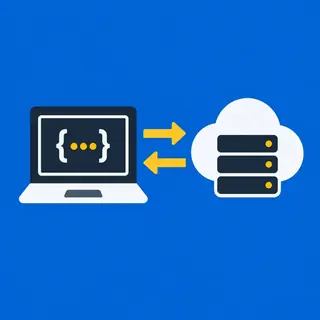
After your server is live, you’ll learn how to send queries from a JavaScript frontend using Fetch API or Apollo Client. For instance, a POST request to /graphql with query { users { id name } } returns exactly those fields. We’ll also cover handling variables, fragments, and mutation (for create/update/delete operations). Throughout, you’ll see how GraphQL’s type system catches errors before they reach the browser. This hands-on path builds confidence for integrating GraphQL into real projects, from a simple blog to a full-stack e-commerce site. By the end, you’ll have a reusable pattern for structuring your own API endpoints.
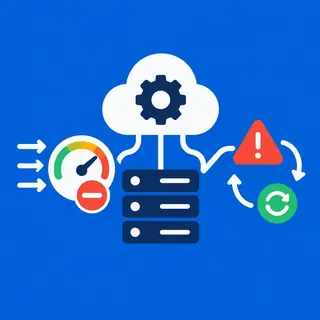
While GraphQL solves over-fetching, it can introduce N+1 query problems if not optimized. For example, fetching a list of posts and their authors might trigger one query per author. We’ll introduce DataLoader—a JavaScript library that batches and caches requests—to eliminate this bottleneck. You’ll also learn about cursor-based pagination for large datasets, using first and after arguments, which is more scalable than offset pagination. In addition, Apollo Client offers built-in caching, which stores query results and updates them intelligently, reducing redundant network calls on re-renders.
Another performance tip is using persisted queries, where the server stores a hash of the query string and clients send only that hash—shrinking payload sizes significantly. For real-time features, consider subscriptions over polling, though they require WebSocket support. We’ll also discuss how to handle file uploads via GraphQL (using multipart requests) and when to use REST alongside GraphQL for non-standard tasks like file streaming. By implementing these strategies, you’ll keep your API snappy even with thousands of requests per second. This knowledge is crucial for interview prep and production-ready development.
Testing GraphQL differs from testing REST because you need to validate the schema and resolvers together. We’ll use Jest and Apollo Server Testing utilities to create a test server that runs your schema in memory. You can write unit tests for individual resolvers and integration tests that execute full queries. For example, you can assert that a query with all fields returns the correct shape, or that a mutation only accepts validated input. This catches regressions early and documents expected behavior. We’ll also cover mocking data sources to isolate business logic.
Debugging in production is eased by GraphQL’s trace extensions, which show timing details for each resolver. Tools like Apollo Studio or GraphQL Voyager provide visualizations of your schema and usage metrics. For local debugging, the Playground allows you to save query history and test edge cases. We’ll also discuss common pitfalls like circular fragments, unwanted null values, and handling errors with custom error codes. You’ll learn to structure your responses with an errors array while still returning partial data—a pattern that improves frontend resilience. By the end, you’ll have a testing suite that boosts confidence and speeds up feature development.
Leading companies rely on GraphQL for good reason. GitHub switched its public API to GraphQL, enabling developers to fetch issues alongside PRs with precise filters. Shopify uses it for their storefront API, allowing merchants to request exactly the product data they need. Netflix has built an internal GraphQL layer to unify multiple REST microservices, drastically reducing mobile app latency. These examples illustrate how GraphQL scales to enterprise needs, dealing with billions of requests daily. For smaller projects, even a WordPress site can benefit from a GraphQL plugin to expose posts and custom fields more flexibly.
In the JavaScript ecosystem, frameworks like Next.js and Nuxt often integrate Apollo Client for server-side rendering (SSR) with GraphQL, improving SEO and initial load time. If you’re building a social feed or a content management system, GraphQL’s ability to fetch nested comments and likes in one request is a game-changer. You’ll also find that many open-source tools—like Hasura—generate GraphQL APIs automatically from databases, saving months of boilerplate. These case studies will inspire you to apply GraphQL to your own projects, whether you’re creating a personal portfolio or a start-up MVP. Understanding these patterns helps you make informed architectural decisions.
Initially, yes, because you must learn the schema and query syntax. However, once you grasp the basics, it often feels more intuitive for complex data needs. The strongly typed schema provides immediate feedback, and tools like Apollo Client simplify state management. For simple CRUD operations, REST might be simpler, but for nested data, GraphQL’s learning curve pays off quickly.
Absolutely. Many projects adopt a hybrid approach, where a GraphQL gateway sits in front of existing REST endpoints. Your clients query GraphQL, and the server resolvers internally call REST APIs to fetch data. This lets you migrate gradually without rewriting everything. Tools like Apollo Server can act as a BFF (Backend for Frontend) to aggregate multiple services.
Yes, especially with Apollo Client or urql, which provide hooks like useQuery and useMutation that integrate seamlessly with component lifecycles. You can manage cached data, optimistic UI, and pagination easily. For Vue, there’s Vue Apollo. Both frameworks have excellent documentation and community support, making adoption straightforward.
GraphQL doesn’t natively support binary file uploads, but you can use the GraphQLUpload scalar from the graphql-upload package. In your mutation, accept a File type, then stream it to a cloud storage service like S3 or Cloudinary. Alternatively, upload files via a separate REST endpoint and then pass the URL as a string field in GraphQL.
Yes, but you need to implement security measures like query complexity limits, rate limiting, and input validation to avoid abusive queries. Use authentication and authorization middleware in your resolvers to protect sensitive data. Tools like GraphQL Shield or Apollo Server’s built-in depth limiting help mitigate DOS attacks. With proper configuration, GraphQL is as secure as any REST API.