REST API Design Best Practices: Structuring Your Endpoints
🤔 Master REST API design best practices! This guide provides clear, concise steps to structuring efficient, scalable endpoints, essential for any JavaScript…
Read article
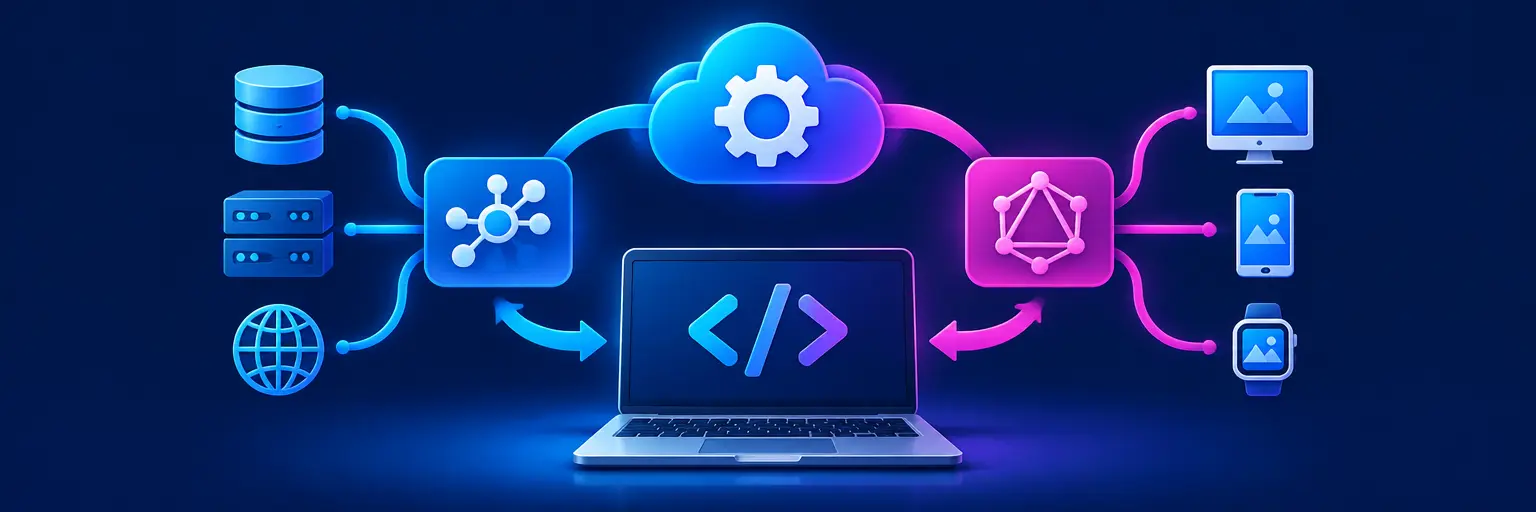
APIs and web services are the backbone of modern web development, and understanding them is essential for any JavaScript developer. This subcategory demystifies the core concepts of REST and GraphQL, from how HTTP requests work to the architectural principles behind each approach. You’ll learn why REST uses clear, resource-based endpoints and stateless communication, while GraphQL offers flexibility with a single query language that lets you request exactly the data you need. Through practical examples, you’ll see how to consume both types of APIs in JavaScript, handle authentication, and troubleshoot common issues. Whether you’re building your first fetch request or optimizing data fetching for a complex app, this guide gives you the foundational context to choose the right tool for your project. Perfect for beginners and intermediate learners alike, this content bridges theory and practice with actionable insights—empowering you to integrate third-party services, build your own APIs, or design a scalable data layer with confidence. Explore real-world use cases, compare trade-offs, and pick up key patterns to write cleaner, more efficient code in your JavaScript applications. 🚀
🤔 Master REST API design best practices! This guide provides clear, concise steps to structuring efficient, scalable endpoints, essential for any JavaScript…
Read article
😊 Master JavaScript GraphQL API interaction! This practical tutorial guides you step-by-step through consuming GraphQL APIs with JavaScript, perfect for beginners and…
Read article
🤔 Discover how JavaScript API future trends are shaping application development! This article explores key innovations and emerging patterns, empowering you to…
Read articleWelcome to this focused subcategory on Introduction to APIs and Web Services, a cornerstone of modern web development on LearnJavaScriptQuickly. Here, you’ll demystify how applications communicate over the internet, moving from static pages to dynamic, data-driven experiences. We break down two dominant architectural styles—REST and GraphQL—with practical, JavaScript-centric examples. Whether you’re fetching data for a portfolio project or building a full-stack app, this guide equips you with foundational knowledge, best practices, and hands-on exercises. Expect clear comparisons, real-world use cases, and code snippets you can adapt immediately.
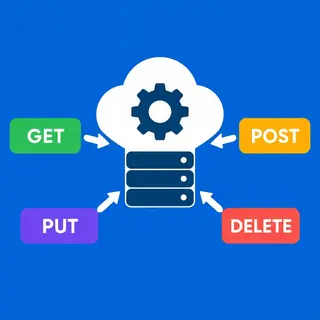
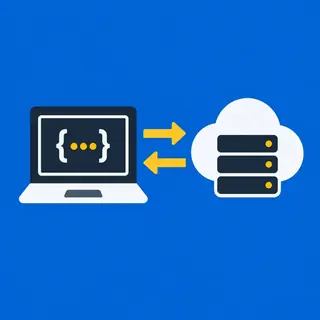
REST (Representational State Transfer) is the most widely adopted API style, relying on HTTP methods like GET, POST, PUT, and DELETE to manipulate resources identified by URLs. In this section, you’ll learn how RESTful endpoints are structured, why statelessness matters, and how to handle status codes and data formats (JSON/XML). We’ll walk through a simple JavaScript fetch example, showing you how to call a public REST API and display results. By the end, you’ll understand the trade-offs of REST, including over-fetching and multiple round-trips, which set the stage for GraphQL.
What to expect: You’ll not only grasp the theory but also build a mini weather app using a REST API. We’ll cover common pitfalls like CORS, authentication tokens, and error handling, ensuring you can debug real-world API interactions. This foundational knowledge is essential for any JavaScript developer, as most third-party services—from payment gateways to social media—still predominantly offer REST endpoints.
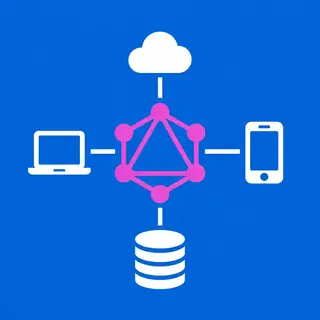
GraphQL, created by Facebook, revolutionizes API design by letting clients specify exactly which fields they need in a single request. Instead of multiple endpoints, you query a single /graphql endpoint with a typed schema. This section introduces you to queries, mutations, and subscriptions, along with the concept of resolvers in JavaScript. You’ll compare a REST request (three calls) versus one GraphQL query for the same data, highlighting efficiency and reduced payload size. We’ll also touch on tooling like Apollo Client and GraphiQL, which enhance developer experience.
What to expect: You’ll write your first GraphQL query inside a simple Node.js script, using a public GraphQL API. We’ll explain how to handle variables, fragments, and error responses, plus the importance of caching. This knowledge is vital for modern frontend frameworks, as GraphQL is increasingly adopted in enterprise applications for its flexibility and performance benefits.
Beyond the two giants, web services include older standards like SOAP (XML-based) and modern approaches like gRPC (binary, high-performance) and WebSockets for real-time communication. This section gives a concise overview of when to choose each: SOAP for enterprise legacy systems, gRPC for microservices with heavy internal traffic, and WebSockets for chat apps or live dashboards. We’ll also clarify the role of JSON, XML, and Protobuf in serialization, plus how JavaScript’s fetch and axios fit into these ecosystems.
What to expect: You’ll compare a simple SOAP envelope and a gRPC call, understanding why REST/GraphQL dominate the web. We’ll share practical advice on versioning APIs, pagination (cursor vs. offset), and rate limiting—skills that differentiate junior from senior developers. This broad perspective ensures you’re not boxed into one paradigm when tackling real projects.
The best way to learn is by doing. Here, we guide you through creating a minimal REST API using Node.js and Express. You’ll define routes for CRUD operations on a sample ‘tasks’ resource, implement middleware for logging, and test with Postman or curl. We’ll cover how to structure your project, validate input, and return consistent JSON responses with proper status codes. This exercise solidifies your understanding of RESTful principles, from endpoint naming to stateless authentication via JWT tokens (simplified for beginners).
What to expect: By the end, you’ll have a working API that you can deploy to a free platform like Render or Heroku. We’ll also show you how to document it with Swagger/OpenAPI, making it shareable and future-proof. This is a valuable portfolio piece, demonstrating your ability to both consume and create APIs—a key requirement for full-stack JavaScript roles.
This section focuses on the client side—how to integrate APIs into your JavaScript apps. You’ll master the Fetch API with async/await, handling loading states, errors, and cancellation with AbortController. We’ll then compare Fetch to Axios, a popular library that adds convenience features like automatic JSON transformation and request interception. Through practical examples, you’ll build a searchable user directory using both a REST endpoint and a GraphQL query, understanding the differences in data shaping. We’ll also cover best practices for API keys in frontend code, using environment variables and proxies.
What to expect: You’ll learn how to chain multiple requests, deal with arrays of promises via Promise.all, and implement infinite scrolling with pagination. We’ll also touch on caching strategies and debouncing to avoid over-fetching. This knowledge is immediately applicable to any project, so you’ll leave with confidence in handling network requests in modern JavaScript frameworks like React or Vue.
REST uses multiple endpoints, each returning fixed data structures, while GraphQL uses a single endpoint where you query specific fields. REST often causes over-fetching (getting extra data) or under-fetching (needing multiple calls). GraphQL solves this by letting the client define the response shape, improving efficiency but adding complexity in schema management.
Both are valuable for a JavaScript developer. REST is still the most common in industry, especially for public APIs. GraphQL is growing, especially in modern startups. Learning both gives you flexibility in interviews and projects. Start with REST—it’s simpler—then expand to GraphQL once you’re comfortable with HTTP basics.
GraphQL often reduces payload size and network requests, helping performance on slow connections. However, it can be slower on the server due to complex queries. REST is simpler to cache and has fewer moving parts. For high-traffic, compute-heavy systems, REST might be better; for mobile apps, GraphQL’s minimal over-fetching often wins.
Yes, many projects use a hybrid approach. For example, you might use REST for external integrations and GraphQL internally. Tools like GraphQL federation can wrap REST services. However, doing so adds complexity. Start with one, then add the other only if there’s a clear benefit, such as unify data access for multiple clients.
Public APIs like JSONPlaceholder (REST) and Countries GraphQL are excellent for practice. Use Postman to test endpoints, then write JavaScript code with fetch. Also, check out the GitHub API or OpenWeather for real-world data. Finally, build your own simple API with Express to fully understand the server side.